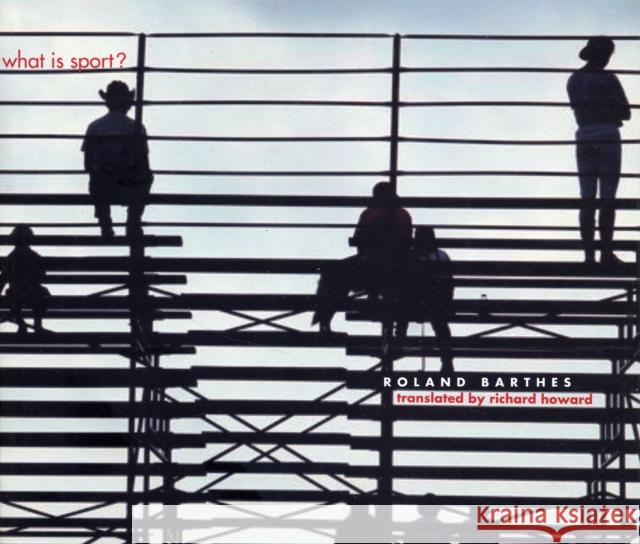
A little-known gem, the text of Barthes's What Is Sport? was never reprinted in the Seuil editions of his Complete Works--neither the three-volume version nor the later five-volume edition. It is published here in a graceful and faithful English translation by Pulitzer Prize winner Richard Howard. Originally commissioned by the Canadian Broadcasting Corporation as the text for a documentary film directed by Hubert Aquin, What Is Sport? was written three years after the publication of Barthes's Mythologies (1957) and bears considerable resemblance to that work. Some...
A little-known gem, the text of Barthes's What Is Sport? was never reprinted in the Seuil editions of his Complete Works--neither the th...
What is it that we do when we enjoy a text? What is the pleasure of reading? The French critic and theorist Roland Barthes's answers to these questions constitute "perhaps for the first time in the history of criticism . . . not only a poetics of reading . . . but a much more difficult achievement, an erotics of reading . . . . Like filings which gather to form a figure in a magnetic field, the parts and pieces here do come together, determined to affirm the pleasure we must take in our reading as against the indifference of (mere) knowledge." --Richard Howard
What is it that we do when we enjoy a text? What is the pleasure of reading? The French critic and theorist Roland Barthes's answers to these quest...
With this book, Barthes offers a broad-ranging meditation on the culture, society, art, literature, language, and iconography--in short, both the sign-oriented realities and fantasies--of Japan itself.
With this book, Barthes offers a broad-ranging meditation on the culture, society, art, literature, language, and iconography--in short, both the s...
First published in 1977, Roland Barthes by Roland Barthes is the great literary theorist's most original work--a brilliant and playful text, gracefully combining the personal and the theoretical to reveal Roland Barthes's tastes, his childhood, his education, his passions and regrets.
First published in 1977, Roland Barthes by Roland Barthes is the great literary theorist's most original work--a brilliant and playful text,...
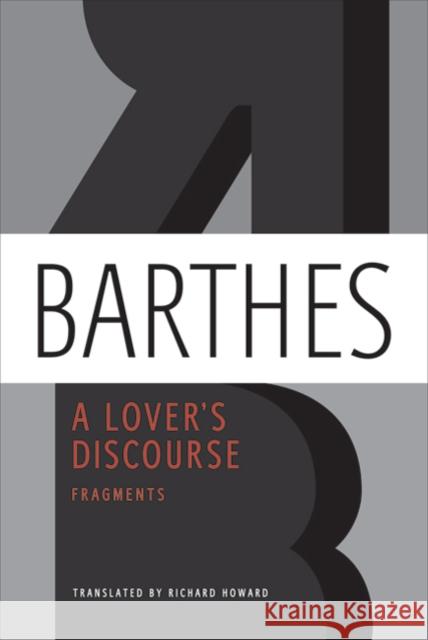
A Lover's Discourse, at its 1978 publication, was revolutionary: Roland Barthes made unprecedented use of the tools of structuralism to explore the whimsical phenomenon of love. Rich with references ranging from Goethe's Werther to Winnicott, from Plato to Proust, from Baudelaire to Schubert, A Lover's Discourse artfully draws a portrait in which every reader will find echoes of themselves.
A Lover's Discourse, at its 1978 publication, was revolutionary: Roland Barthes made unprecedented use of the tools of structuralism to expl...
An introduction to the thinking of the French intellectual, Roland Barthes, as applied to such diverse topics as Gide, Garbo, striptease, photography and the Eiffel Tower. The pieces in this collection were written over a period of three decades.
An introduction to the thinking of the French intellectual, Roland Barthes, as applied to such diverse topics as Gide, Garbo, striptease, photography ...
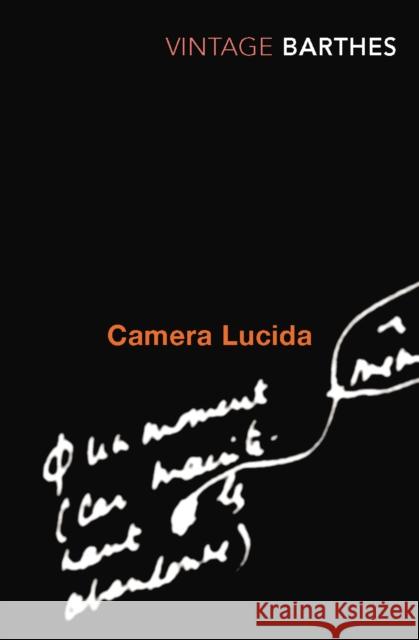
Examining the themes of presence and absence, the relationship between photography and theatre, history and death, these 'reflections on photography' begin as an investigation into the nature of photographs
Examining the themes of presence and absence, the relationship between photography and theatre, history and death, these 'reflections on photography' ...
'Mythologies' is a series of essays on the codings that command our daily life, from hairstyles in the film Julius Caesar to glossy photographs of gourmet cooking, to the cult of foam in detergents.
'Mythologies' is a series of essays on the codings that command our daily life, from hairstyles in the film Julius Caesar to glossy photographs of gou...