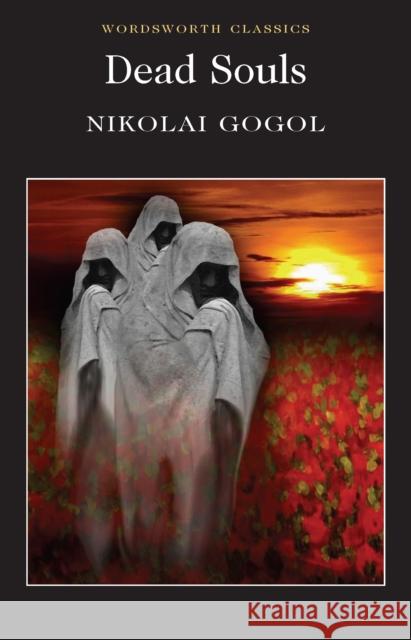
Gogol's 1842 novel Dead Souls, a comic masterpiece about a mysterious con man and his grotesque victims, is one of the major works of Russian literature. It was translated into English in 1942 by Bernard Guilbert Guerney; the translation was hailed by Vladimir Nabokov as "an extraordinarily fine piece of work" and is still considered the best translation of Dead Souls ever published. Long out of print, the Guerney translation of Dead Souls is now reissued. The text has been made more faithful to Gogol's original by removing passages that Guerney inserted from earlier...
Gogol's 1842 novel Dead Souls, a comic masterpiece about a mysterious con man and his grotesque victims, is one of the major works of Russia...
Nikolai Gogol, MR Laurence Senelick (Tufts University USA)
Nikolai Gogol's classic and hilarious satire of bureaucratic ineptness and corruption in a first-class translation by Laurence Senelick. "The emperor deigned to attend the premiere with the heir apparent: he was extremely pleased and laughed heartily. The play is very entertaining but an intolerable insult to the nobility, the civil service, and the merchantry." -Khrapovitsky's diary, 1836 "Everybody got his and me first of all " -Tsar Nicholas I (allegedly), 1836 "The audience, struck by the novelty, laughed enormously, but I expected a better reception ... One of my friends explained the...
Nikolai Gogol's classic and hilarious satire of bureaucratic ineptness and corruption in a first-class translation by Laurence Senelick. "The emperor ...
Gogol's stories are admired for their skillful mingling of fantasy and reality, quiet good humor and use of mundane details -- as Gogol put it -- "to extract the extraordinary from the ordinary." Imaginative and timeless, they remain as fresh and significant today as they were to readers generations ago. This rich selection of four short stories by the great 19th-century Russian author of Dead Souls includes "The Nose," a savage satire of incompetent bureaucrats and the snobbery and complacency of the Russian upper classes; "Old-Fashioned Farmers," a sketch depicting an elderly couple who...
Gogol's stories are admired for their skillful mingling of fantasy and reality, quiet good humor and use of mundane details -- as Gogol put it -- "to ...
A stranger arrives in a Russian backwater community with a bizarre proposition for the local landowners: cash for their "dead souls," the serfs who have died in their service and for whom they must continue to pay taxes until the next census. The landowner receives a payment and a relief of his tax burden, and the stranger receives -- what? Gogol's comic masterpiece offers the answer in a vast and satirical painting of the Russian panorama, as it traces the path and encounters of its mysterious protagonist, Pavel Ivanovich Chichikov, in pursuit of his dubious scheme. The plot of...
A stranger arrives in a Russian backwater community with a bizarre proposition for the local landowners: cash for their "dead souls," the serfs who ha...
Taken from Nikolai Gogol s first successful work, the story collectionEvenings on a Farm Near Dikanka, The Night Before Christmas is available here for the first time as a stand-alone novella and is a perfect introduction to the great Russian satirist. "
Taken from Nikolai Gogol s first successful work, the story collectionEvenings on a Farm Near Dikanka, The Night Before Christmas is availabl...
The news that a government inspector is due to arrive in a small Russian town sends its bureaucrats into a panicked frenzy. A simple case of mistaken identity exposes the hypocrisy and corruption at the heart of the town in this biting moral satire. David Harrower's version of "Nikolai Gogol's Government Inspector" premiered at the Warwick Arts Centre in May 2011 and transferred to Young Vic, London in June.
The news that a government inspector is due to arrive in a small Russian town sends its bureaucrats into a panicked frenzy. A simple case of mistaken ...
Gogol's tale of a dismissed civil servant turned unscrupulous confidence man is the most essentially Russian of all the great novels in Russian literature. With its rich and ebullient language, ironic twists, and cast of comedic characters, Dead Souls (1842) stands as one of the most dazzling and poetic masterpieces of the nineteenth century. This brilliant new translation by Christopher English is complemented by a superb introductory essay by the pre-eminent Gogol scholar, Robert Maguire. About the Series: For over 100 years Oxford World's Classics has made available the broadest...
Gogol's tale of a dismissed civil servant turned unscrupulous confidence man is the most essentially Russian of all the great novels in Russian litera...
Nikolai Gogol, Nick Worrall, Non Worrall, Edward O. Marsh, Jeremy Brooks
Widely held to have led the realist revolution in Russian drama, Gogol liberated comedy from a tradition of didacticism and sentimentality. The Government Inspector, Gogol's masterpiece, was regarded by Vladimir Nabokov as the greatest play in the Russian language. This is the poet and playwright Adrian Mitchell's version of Gogol's classic satire on human vanity with its story of a penniless nobody from Moscow who is mistaken for a government inspector by the corrupt and self-seeking officials of a small town in Tsarist Russia.
Methuen Student Editions are expertly annotated...
Widely held to have led the realist revolution in Russian drama, Gogol liberated comedy from a tradition of didacticism and sentimentality. The Gov...
With an Introduction by Anthony Briggs. Translated by Isabel F. Hapgood.
Russia in the 1840s. There is a stranger in town, and he is behaving oddly. The unctuous Pavel Chichikov goes around the local estates buying up 'dead souls'. These are the papers relating to serfs who have died since the last census, but who remain on the record and still attract a tax demand. Chichikov is willing to relieve their owners of the tax burden by buying the titles for a song. What he does not say is that he then proposes to take out a huge mortgage against these fictitious citizens...
With an Introduction by Anthony Briggs. Translated by Isabel F. Hapgood.
Russia in the 1840s. There is a stranger in town, ...
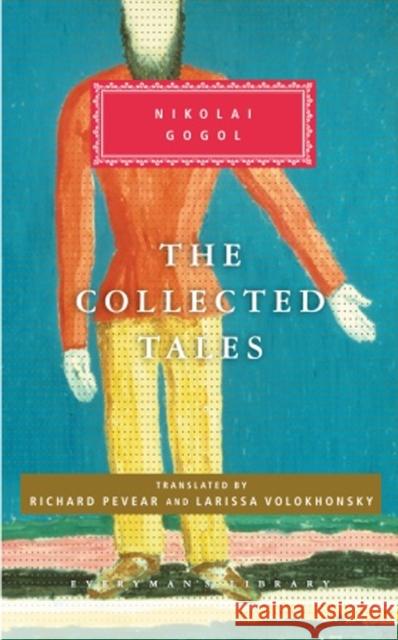
Collected here are Gogol's finest tales - stories which combine the wide-eyed, credulous imagination of the peasant with the sardonic social criticism of the city dweller - allowing readers to experience anew the unmistakable genius of a writer who paved the way of Dostoevsky and Kakfa.
Collected here are Gogol's finest tales - stories which combine the wide-eyed, credulous imagination of the peasant with the sardonic social criticism...