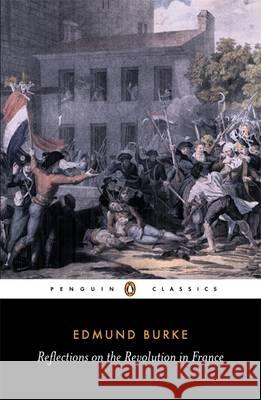
To make a revolution is to subvert the ancient state of our country; and no common reasons are called for to justify so violent a proceeding
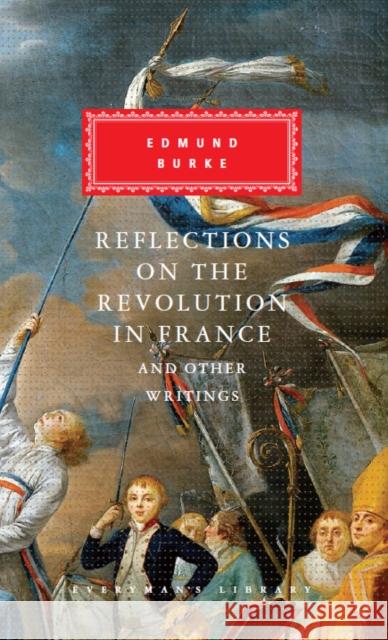
Burke s seminal work was written during the early months of the French Revolution, and it predicted with uncanny accuracy many of its worst excesses, including the Reign of Terror. A scathing attack on the revolution s attitudes to existing institutions, property and religion, it makes a cogent case for upholding inherited rights and established customs, argues for piecemeal reform rather than revolutionary change and deplores the...
To make a revolution is to subvert the ancient state of our country; and no common reasons are called for to justify so violent a proceeding <...
John Pocock's edition of Burke's "Reflections" is two classics in one: Burke's Reflections and Pocock's reflections on Burke and the eighteenth century.
John Pocock's edition of Burke's "Reflections" is two classics in one: Burke's Reflections and Pocock's reflections on Burke and the eighteenth cen...
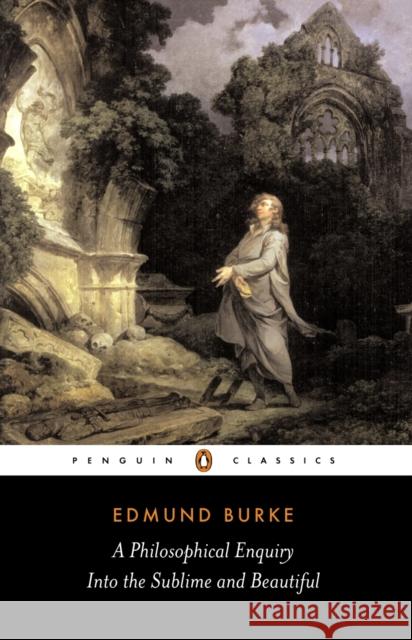
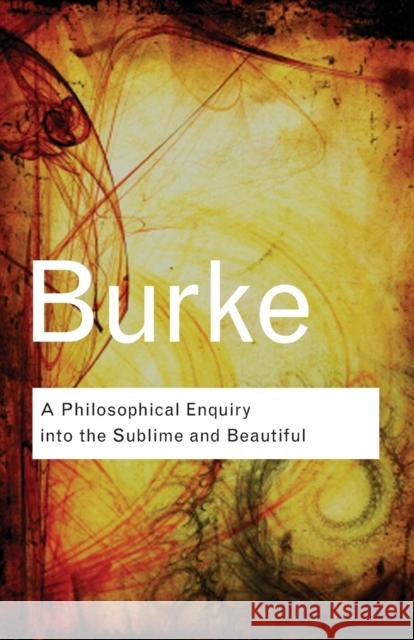
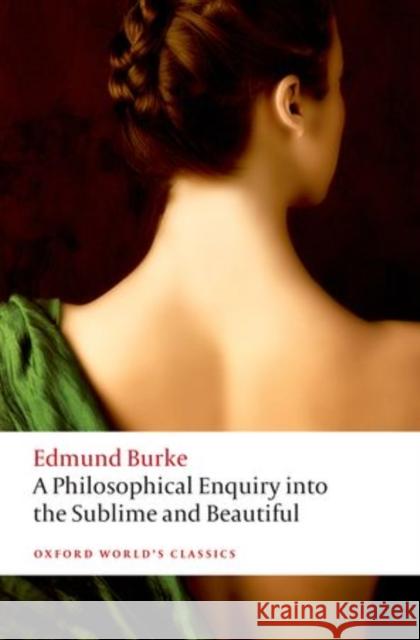
Edmund Burke was one of the foremost philosophers of the eighteenth century and wrote widely on aesthetics, politics and society. In this landmark work, he propounds his theory that the sublime and the beautiful should be regarded as distinct and wholly separate states - the first, an experience inspired by fear and awe, the second an expression of pleasure and serenity. Eloquent and profound, A Philosophical Enquiry is an involving account of our sensory, imaginative and judgmental processes and their relation to artistic appreciation. Burke's work was hugely influential on his...
Edmund Burke was one of the foremost philosophers of the eighteenth century and wrote widely on aesthetics, politics and society. In this landmark wor...
This new and up-to-date edition of a book that has been central to political philosophy, history, and revolutionary thought for two hundred years offers readers a dire warning of the consequences that follow the mismanagement of change. Written for a generation presented with challenges of terrible proportions--the Industrial, American, and French Revolutions, to name the most obvious--Burke's Reflections of the Revolution in France displays an acute awareness of how high political stakes can be, as well as a keen ability to set contemporary problems within a wider context of...
This new and up-to-date edition of a book that has been central to political philosophy, history, and revolutionary thought for two hundred years offe...
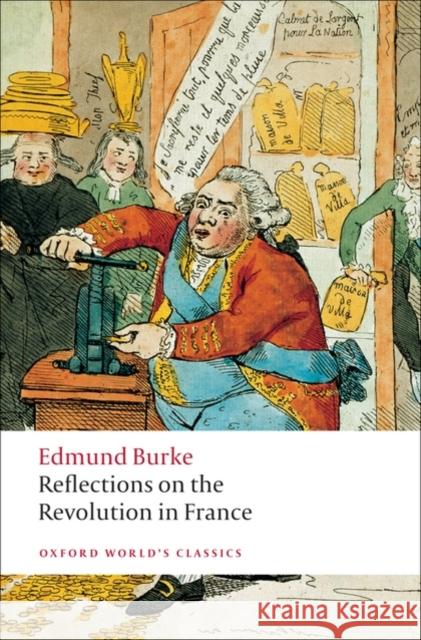
Edited with an introduction and notes by James T. Boulton.
'One of the greatest essays ever written on art.'- The Guardian
Edmund Burke's A Philosophical Enquiry into the Origin of our Ideas of the Sublime and Beautiful is one of the most important works of aesthetics ever published. Whilst many writers have taken up their pen to write of "the beautiful," Burke's subject here was the quality he uniquely distinguished as "the sublime"-an all-consuming force beyond beauty that compelled terror as much as rapture in all who beheld it. It was an...
Edited with an introduction and notes by James T. Boulton.
'One of the greatest essays ever written on art.'- The Guard...
Amid the 18th century's golden generation that included his companions Adam Smith, Samuel Johnson and Edward Gibbon, Burke's controversial mixture of conservative and subversive theories made him first a marginal figure, and finally a revered theorist - a hero of the Romantics. He warned of the effects of British rule in Ireland, the loss of the American colonies, and most famously, he foresaw the disastrous consequences of revolution in France. This he predicted, would trigger extremism, terror and the atomisation of society - a profound analysis that continues to resonate today. In this...
Amid the 18th century's golden generation that included his companions Adam Smith, Samuel Johnson and Edward Gibbon, Burke's controversial mixture of ...
Paul Guyer conducts the reader through Burke's 'Enquiry', focusing on its place in the history of aesthetics and highlighting its innovations, as well as its influence on many subsequent authors from Kant and Schiller to Ruskin and Nietzsche.
Paul Guyer conducts the reader through Burke's 'Enquiry', focusing on its place in the history of aesthetics and highlighting its innovations, as well...