"It sounds like a simple thing, to say what you see," Mark Doty begins. "But try to find words for the shades of a mottled sassafras leaf, or the reflectivity of a bay on an August morning, or the very beginnings of desire stirring in the gaze of someone looking right into your eyes . . ." Doty finds refuge in the sensory experience found in poems by Blake, Whitman, Bishop, and others. The Art of Description is an invaluable book by one of America's most revered writers and teachers.
"It sounds like a simple thing, to say what you see," Mark Doty begins. "But try to find words for the shades of a mottled sassafras leaf, or the r...
Mark Doty's poetry has long been celebrated for its risk and candour, an ability to find transcendent beauty even in the mundane and grievous, an unflinching eye that - as Philip Levine says - 'looks away from nothing'. In the poems of Deep Lane the stakes are higher: there is more to lose than ever before, and there is more for us to gain. 'Pure appetite,' he writes ironically early in the collection, 'I wouldn't know anything about that.' And the following poem answers: Down there the little star-nosed engine of desire at work all night, secretive: in the morning a new line running across...
Mark Doty's poetry has long been celebrated for its risk and candour, an ability to find transcendent beauty even in the mundane and grievous, an unfl...
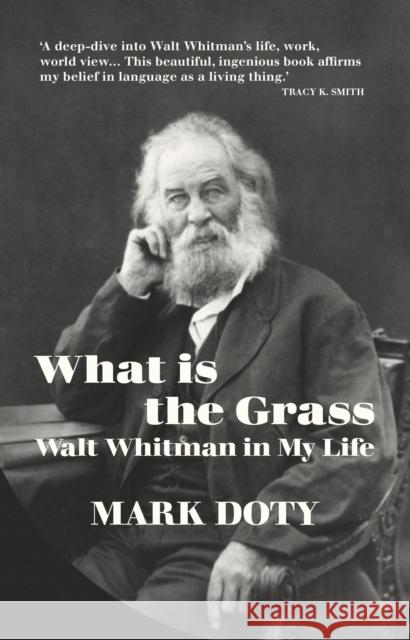
In What Is the Grass, Doty - a poet, a lover of men, a New Yorker, and an American - keeps company with Whitman and his mutable, landmark work, Leaves of Grass, tracing the resonances between his own experience and the legendary poet's life and work.What is it, then, between us? Whitman asks.
In What Is the Grass, Doty - a poet, a lover of men, a New Yorker, and an American - keeps company with Whitman and his mutable, landmark work, Leaves...