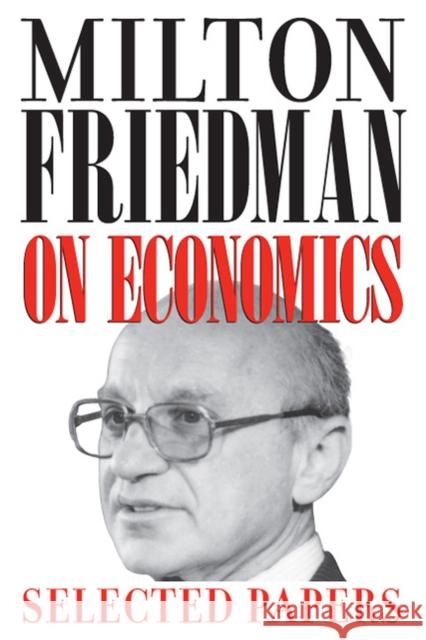
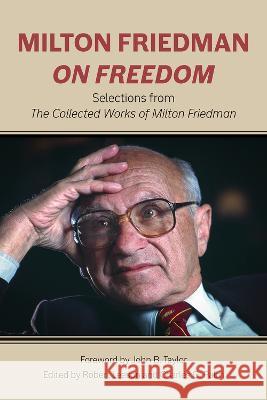
On his death in the autumn of 2006, Milton Friedman was lauded as "the grandmaster of free-market economic theory in the postwar era" by the New York Times and "the most influential economist of the second half of the 20th century" by the Economist. Winner of the Nobel Prize in Economics in 1976, Friedman was both a highly respected economist and a prominent public intellectual, the leader of a revolution in economic and political thought that argued robustly in favor of virtues of free markets and laissez-faire policies. Milton Friedman on Economics: Selected Papers...
On his death in the autumn of 2006, Milton Friedman was lauded as "the grandmaster of free-market economic theory in the postwar era" by the New Yo...
"Stimulating, provocative, often infuriating, but well worth reading." Peter Newman, "Economica" "His critical blast blows like a north wind against the more pretentious erections of modern economics. It is however a healthy and invigorating blast, without malice and with a sincere regard for scientific objectivity." K.E. Boulding, "Political Science Quarterly" "Certainly one of the most engrossing volumes that has appeared recently in economic theory." William J. Baumol, "Review of Economics and Statistics""
"Stimulating, provocative, often infuriating, but well worth reading." Peter Newman, "Economica" "His critical blast blows like a north wind again...
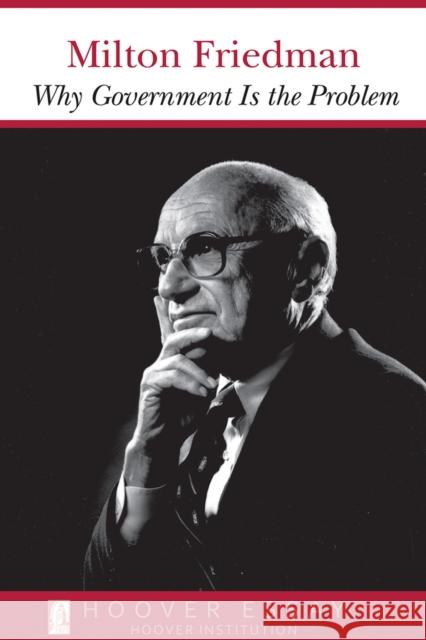
Friedman discusses a government system that is no longer controlled by "we, the people." Instead of Lincoln's government "of the people, by the people, and for the people," we now have a government "of the people, by the bureaucrats, for the bureaucrats," including the elected representatives who have become bureaucrats.
Friedman discusses a government system that is no longer controlled by "we, the people." Instead of Lincoln's government "of the people, by the people...