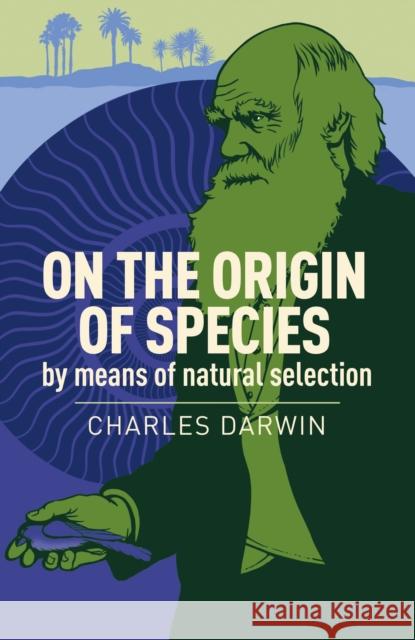
In The Origin of Species (1859) Darwin challenged many of the most deeply-held beliefs of the Western world. Arguing for a material, not divine, origin of species, he showed that new species are achieved by "natural selection." The Origin communicates the enthusiasm of original thinking in an open, descriptive style, and Darwin's emphasis on the value of diversity speaks more strongly now than ever. As well as a stimulating introduction and detailed notes, this edition offers a register of the many writers referred to by Darwin in the text. About the Series:...
In The Origin of Species (1859) Darwin challenged many of the most deeply-held beliefs of the Western world. Arguing for a material, not divi...
This unique anthology brings together a marvelous collection of Darwin's most accessible and significant writings, providing the most fully rounded picture of his ideas to be found in a single volume. This marvelous book presents readers with the key chapters of his most important books, including excerpts from the Journal of Researches on the Beagle voyage (1845), the Origin of Species (1859), and the Descent of Man (1871), along with the full, authoritative text of Darwin's delightful autobiography Recollections. These writings are accompanied by generous selections of responses from...
This unique anthology brings together a marvelous collection of Darwin's most accessible and significant writings, providing the most fully rounded pi...
"The Origin is one of the most important books ever published, and a knowledge of it should be a part of the intellectual equipment of every educated person. . . . The book will endure in future ages so long as a knowledge of science persists among mankind." -- Nature It took Charles Darwin more than twenty years to publish this book, in part because he realized that it would ignite a firestorm of controversy. Onthe Origin of Species first appeared in 1859, and it remains a continuing source of conflict to this day. Even among those who reject its ideas,...
"The Origin is one of the most important books ever published, and a knowledge of it should be a part of the intellectual equipment of every ed...
Charles Darwin's On the Origin of Species is the most important and yet least read scientific work in the history of science. Now James T. Costa--experienced field biologist, theorist on the evolution of insect sociality, and passionate advocate for teaching Darwin in a society in which a significant proportion of adults believe that life on earth has been created in its present form within the last 10,000 years--has given a new voice to this epochal work. By leading readers line by line through the Origin, Costa brings evolution's foundational text to life for a new generation....
Charles Darwin's On the Origin of Species is the most important and yet least read scientific work in the history of science. Now James T. Cost...
Charles Darwin's travels around the world as an independent naturalist on HMS Beagle between 1831 and 1836 impressed upon him a sense of the natural world's beauty and sublimity which language could barely capture. Words, he said, were inadequate to convey to those who have not visited the inter-tropical regions, the sensation of delight which the mind experiences'.
Yet in a travel journal which takes the reader from the coasts and interiors of South America to South Sea Islands, Darwin's descriptive powers are...
With an Introduction by David Amigoni.
Charles Darwin's travels around the world as an independent naturalist on HMS Beagle...
When the eminent naturalist Charles Darwin returned from South America on board the H.M.S Beagle in 1836, he brought with him the notes and evidence which would form the basis of his landmark theory of evolution of species by a process of natural selection. This theory, published as The Origin of Species in 1859, is the basis of modern biology and the concept of biodiversity. It also sparked a fierce scientific, religious and philosophical debate which still continues today.
When the eminent naturalist Charles Darwin returned from South America on board the H.M.S Beagle in 1836, he brought with him the notes and evidence w...
In The Descent of Man Darwin addresses many of the issues raised by his notorious Origin of Species: finding in the traits and instincts of animals the origins of the mental abilities of humans, of language, of our social structures and our moral capacities, he attempts to show that there is no clear dividing line between animals and humans. Most importantly, he accounts for what Victorians called the 'races' of mankind by means of what he calls sexual selection. This book presents a full explanation of Darwin's ideas about sexual selection, including his belief that many...
In The Descent of Man Darwin addresses many of the issues raised by his notorious Origin of Species: finding in the traits and insti...
The Origin of Species Darwin outlined his theory of evolution, which proposed that species had been evolving and differentiating over time under the influence of natural selection. On its publication it became hugely influential, bringing about a seismic shift in the scientific view of humanity's place in the world that is still controversial today. It is both a brilliant work of science and also a clear, vivid and at times even moving, piece of writing that reflects both Darwin's genius and his boundless enthusiasm for the natural world.
With an Afterword by Oliver...
The Origin of Species Darwin outlined his theory of evolution, which proposed that species had been evolving and differentiating over time u...
Darwin's theory is based on the notion of variation. It argues that the numerous traits and adaptations that differentiate species from each other also explain how species evolved over time and gradually diverged. Variations in organisms are apparent both within domesticated species and within species throughout the natural world. Variations in colors, structures, organs, and physical traits differentiate a multitude of species from one another. Heredity is the mechanism that perpetuates variations, Darwin argues, as traits are passed from parents to offspring. What is important about these...
Darwin's theory is based on the notion of variation. It argues that the numerous traits and adaptations that differentiate species from each other als...