As a form of power, subjection is paradoxical. To be dominated by a power external to oneself is a familiar and agonizing form power takes. To find, however, that what "one" is, one's very formation as a subject, is dependent upon that very power is quite another. If, following Foucault, we understand power as forming the subject as well, it provides the very condition of its existence and the trajectory of its desire. Power is not simply what we depend on for our existence but that which forms reflexivity as well. Drawing upon Hegel, Nietzsche, Freud, Foucault, and Althusser, this...
As a form of power, subjection is paradoxical. To be dominated by a power external to oneself is a familiar and agonizing form power takes. To find...
What does it mean to lead a moral life? In her first extended study of moral philosophy, Judith Butler offers a provocative outline for a new ethical practice--one responsive to the need for critical autonomy and grounded in a new sense of the human subject. Butler takes as her starting point one's ability to answer the questions "What have I done?" and "What ought I to do?" She shows that these question can be answered only by asking a prior question, "Who is this 'I' who is under an obligation to give an account of itself and to act in certain ways?" Because I find that I cannot give an...
What does it mean to lead a moral life? In her first extended study of moral philosophy, Judith Butler offers a provocative outline for a new ethical ...
Written in the early 1970s amidst widespread debate over the causes of gender inequality, Marilyn Strathern's Before and After Gender was intended as a widely accessible analysis of gender as a powerful cultural code and sex as a defining mythology. But when the series for which it was written unexpectedly folded, the manuscript went into storage, where it remained for more than four decades. This book finally brings it to light, giving the long-lost feminist work--accompanied here by an afterword from Judith Butler--an overdue spot in feminist history. Strathern incisively...
Written in the early 1970s amidst widespread debate over the causes of gender inequality, Marilyn Strathern's Before and After Gender was inten...
Judith Butler follows Edward Said's late suggestion that through a consideration of Palestinian dispossession in relation to Jewish diasporic traditions a new ethos can be forged for a one-state solution. Butler engages Jewish philosophical positions to articulate a critique of political Zionism and its practices of illegitimate state violence, nationalism, and state-sponsored racism. At the same time, she moves beyond communitarian frameworks, including Jewish ones, that fail to arrive at a radical democratic notion of political cohabitation. Butler engages thinkers such as Edward Said,...
Judith Butler follows Edward Said's late suggestion that through a consideration of Palestinian dispossession in relation to Jewish diasporic traditio...
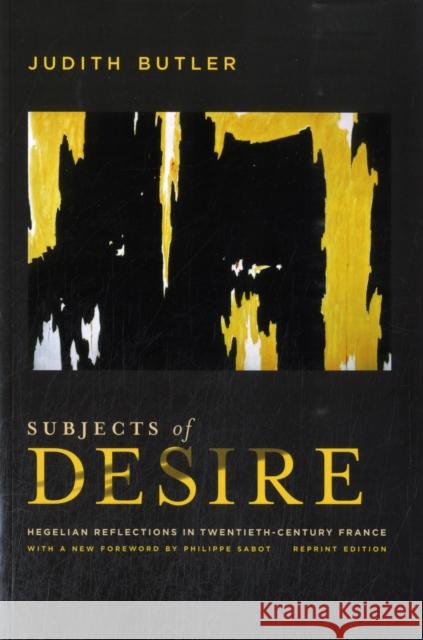
This classic work by one of the most important philosophers and critics of our time charts the genesis and trajectory of the desiring subject from Hegel's formulation in Phenomenology of Spirit to its appropriation by Kojeve, Hyppolite, Sartre, Lacan, Deleuze, and Foucault. Judith Butler plots the French reception of Hegel and the successive challenges waged against his metaphysics and view of the subject, all while revealing ambiguities within his position. The result is a sophisticated reconsideration of the post-Hegelian tradition that has predominated in modern French thought, and...
This classic work by one of the most important philosophers and critics of our time charts the genesis and trajectory of the desiring subject from Heg...
This book brings together a group of Judith Butler's philosophical essays written over two decades that elaborate her reflections on the roles of the passions in subject formation through an engagement with Hegel, Kierkegaard, Descartes, Spinoza, Malebranche, Merleau-Ponty, Freud, Irigaray, and Fanon. Drawing on her early work on Hegelian desire and her subsequent reflections on the psychic life of power and the possibility of self-narration, this book considers how passions such as desire, rage, love, and grief are bound up with becoming a subject within...
This book brings together a group of Judith Butler's philosophical essays written over two decades that elaborate her reflections on ...
In Frames of War, Judith Butler explores the media's portrayal of state violence, a process integral to the way in which the West wages modern war. This portrayal has saturated our understanding of human life, and has led to the exploitation and abandonment of whole peoples, who are cast as existential threats rather than as living populations in need of protection. These people are framed as already lost, to imprisonment, unemployment and starvation, and can easily be dismissed. In the twisted logic that rationalizes their deaths, the loss of such populations is deemed necessary to...
In Frames of War, Judith Butler explores the media's portrayal of state violence, a process integral to the way in which the West wages modern ...
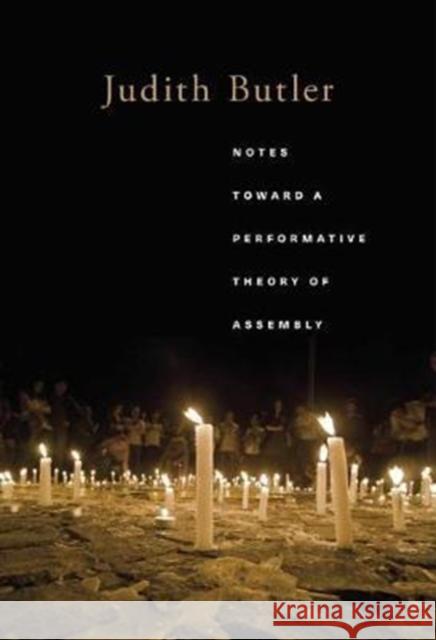
Judith Butler elucidates the dynamics of public assembly under prevailing economic and political conditions. Understanding assemblies as plural forms of performative action, she extends her theory of performativity to show why precarity destruction of the conditions of livability is a galvanizing force and theme in today's highly visible protests.
Judith Butler elucidates the dynamics of public assembly under prevailing economic and political conditions. Understanding assemblies as plural forms ...
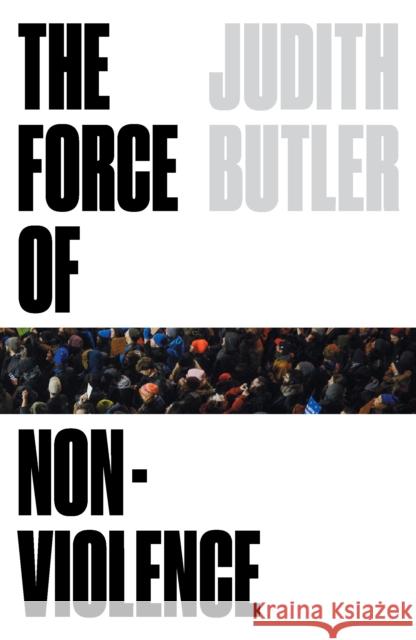
Judith Butler's new book shows how an ethic of nonviolence must be connected to a broader political struggle for social equality. Further, it argues that nonviolence is often misunderstood as a passive practice that emanates from a calm region of the soul, or as an individualist ethical relation to existing forms of power. But, in fact, nonviolence is an ethical position found in the midst of the political field. An aggressive form of nonviolence accepts that hostility is part of our psychic constitution, but values ambivalence as a way of checking the conversion of aggression into violence....
Judith Butler's new book shows how an ethic of nonviolence must be connected to a broader political struggle for social equality. Further, it argues t...