"The years, of which I have spoken to you, when I pursued the inner images, were the most important time of my life. Everything else is to be derived from this. It began at that time, and the later details hardly matter anymore. My entire life consisted in elaborating what had burst forth from the unconscious and flooded me like an enigmatic stream and threatened to break me. That was the stuff and material for more than only one life. Everything later was merely the outer classification, the scientific elaboration, and the integration into life. But the numinous beginning, which...
"The years, of which I have spoken to you, when I pursued the inner images, were the most important time of my life. Everything else is to be deri...
The Red Book, published to wide acclaim in 2009, contains the nucleus of C. G. Jung's later works. It was here that he developed his principal theories of the archetypes, the collective unconscious, and the process of individuation that would transform psychotherapy from treatment of the sick into a means for the higher development of the personality. As Sara Corbett wrote in the New York Times, "The creation of one of modern history's true visionaries, The Red Book is a singular work, outside of categorization. As an inquiry into what it means to be human, it...
The Red Book, published to wide acclaim in 2009, contains the nucleus of C. G. Jung's later works. It was here that he developed his principa...
Alchemy is central to Jung's hypothesis of the collective unconscious. In this volume he begins with an outline of the process and aims of psychotherapy, and then moves on to work out the analogies between alchemy, Christian dogma and symbolism and his own understanding of the analytic process.
Introducing the basic concepts of alchemy, Jung reminds us of the dual nature of alchemy, comprising both the chemical process and a parallel mystical component. He also discusses the seemingly deliberate mystification of the alchemists. Finally, in using the alchemical process as providing...
Alchemy is central to Jung's hypothesis of the collective unconscious. In this volume he begins with an outline of the process and aims of psychoth...
To Jung, synchonicity is a meaningful coincidence in time, a psychic factor which is independant of space and time. This revolutionary concept of synchronicity both challenges and complements the physicist's classical view of casualty. It also forces is to a basic reconsideration of the meaning of chance, probability, coincidence and the singular events in our lives.
To Jung, synchonicity is a meaningful coincidence in time, a psychic factor which is independant of space and time. This revolutionary concept of sync...
In the 1930s C. G. Jung embarked upon a bold investigation into childhood dreams as remembered by adults to better understand their significance to the lives of the dreamers. Jung presented his findings in a four-year seminar series at the Swiss Federal Institute of Technology in Zurich. Children's Dreams marks their first publication in English, and fills a critical gap in Jung's collected works.
Here we witness Jung the clinician more vividly than ever before--and he is witty, impatient, sometimes authoritarian, always wise and intellectually daring, but also a teacher...
In the 1930s C. G. Jung embarked upon a bold investigation into childhood dreams as remembered by adults to better understand their significance to...
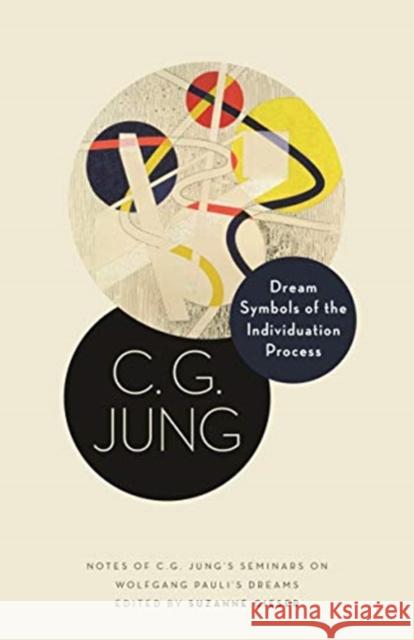
Jung's legendary American lectures on dream interpretationIn 1936 and 1937, C. G. Jung delivered two legendary seminars on dream interpretation, the first on Bailey Island, Maine, the second in New York City. Dream Symbols of the Individuation Process makes these lectures widely available for the first time, offering a compelling look at Jung a
Jung's legendary American lectures on dream interpretationIn 1936 and 1937, C. G. Jung delivered two legendary seminars on dream interpretation, the f...