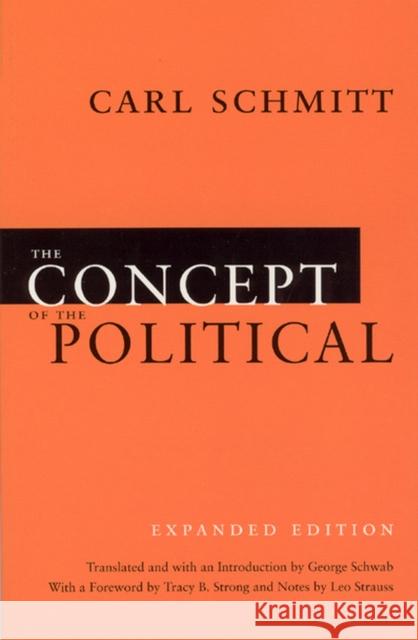
In this, his most influential work, legal theorist and political philosopher Carl Schmitt argues that liberalism's basis in individual rights cannot provide a reasonable justification for sacrificing oneself for the state-a critique as cogent today as when it first appeared. George Schwab's introduction to his translation of the 1932 German edition highlights Schmitt's intellectual journey through the turbulent period of German history leading to the Hitlerian one-party state. In addition to analysis by Leo Strauss and a foreword by Tracy B. Strong placing Schmitt's work into contemporary...
In this, his most influential work, legal theorist and political philosopher Carl Schmitt argues that liberalism's basis in individual rights canno...
In this classic work, Leo Strauss examines the problem of natural right and argues that there is a firm foundation in reality for the distinction between right and wrong in ethics and politics. On the centenary of Strauss's birth, and the fiftieth anniversary of the Walgreen Lectures which spawned the work, Natural Right and History remains as controversial and essential as ever. "Strauss . . . makes a significant contribution towards an understanding of the intellectual crisis in which we find ourselves . . . and] brings to his task an admirable scholarship and a brilliant,...
In this classic work, Leo Strauss examines the problem of natural right and argues that there is a firm foundation in reality for the distinction betw...
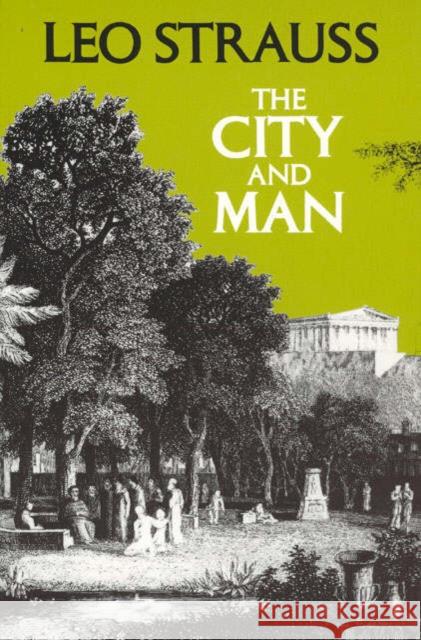
The City and Man consists of provocative essays by the late Leo Strauss on Aristotle's Politics, Plato's Republic, and Thucydides' Peloponnesian Wars. Together, the essays constitute a brilliant attempt to use classical political philosophy as a means of liberating modern political philosophy from the stranglehold of ideology. The essays are based on a long and intimate familiarity with the works, but the essay on Aristotle is especially important as one of Strauss's few writings on the philosopher who largely shaped Strauss's conception of antiquity. The essay on...
The City and Man consists of provocative essays by the late Leo Strauss on Aristotle's Politics, Plato's Republic, and Thucydides...
Leo Strauss argued that the most visible fact about Machiavelli's doctrine is also the most useful one: Machiavelli seems to be a teacher of wickedness. Strauss sought to incorporate this idea in his interpretation without permitting it to overwhelm or exhaust his exegesis of "The Prince" and the "Discourses on the First Ten Books of Livy." "We are in sympathy," he writes, "with the simple opinion about Machiavelli namely, the wickedness of his teaching], not only because it is wholesome, but above all because a failure to take that opinion seriously prevents one from doing justice to what...
Leo Strauss argued that the most visible fact about Machiavelli's doctrine is also the most useful one: Machiavelli seems to be a teacher of wickednes...
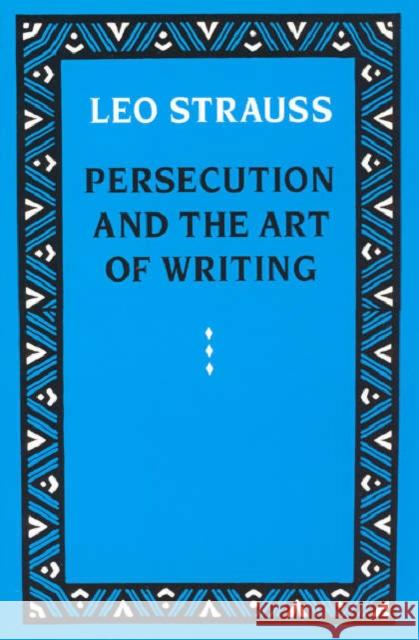
The essays collected in "Persecution and the Art of Writing" all deal with one problem the relation between philosophy and politics. Here, Strauss sets forth the thesis that many philosophers, especially political philosophers, have reacted to the threat of persecution by disguising their most controversial and heterodox ideas. "
The essays collected in "Persecution and the Art of Writing" all deal with one problem the relation between philosophy and politics. Here, Strauss set...
První díl dvousvazkového výboru nejvýznamnějších esejů L. Strausse, tvůrce svébytného pojetí politické filosofie a zakladatele vlivné školy politického myšlení. Výbor je koncipován tak, aby čtenáře seznámil s oběma pilíři Straussovy koncepce, v níž systematická zkoumání jsou vždy opřena o výsledky bádání v oblasti dějin politického myšlení. První svazek obsahuje texty zkoumající pojmy politické filosofie, modernity, dějin a přirozeného zákona.
První díl dvousvazkového výboru nejvýznamnějších esejů L. Strausse, tvůrce svébytného pojetí politické filosofie a zakladatele vlivné Å...
Ve svém nejznámějším díle Přirozené právo a dějiny Leo Strauss popisuje a hodnotí důvody, které vedly k odmítnutí přirozeného práva. Vysvětluje důsledky tohoto odmítnutí i to, proč argumenty proti přirozenému právu nejsou platné. Těm, kdo ho odmítli ve jménu bezbřehé tolerance, připomíná paradox jejich volby. Podle něj pak totiž platí, že „čím více vzděláváme rozum, tím více vzděláváme nihilismus“. A „nevyhnutelným praktickým důsledkem nihilismu je fanatické tmářství a zpátečnictví“, připomíná Strauss.
Ve svém nejznámějším díle Přirozené právo a dějiny Leo Strauss popisuje a hodnotí důvody, které vedly k odmítnutí přirozeného práva....
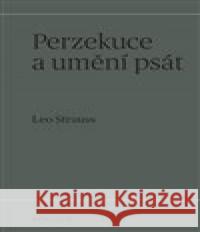
Kniha Perzekuce a umění psát, již mnozí znalci Straussovy filosofie považují za jeho vůbec nejdůležitější dílo, je souborem esejů, jež spojuje téma vztahu politiky a filosofického spisovatelství. Leo Strauss ukazuje na výkladu děl tří židovských myslitelů (Maimonides, ha-Levi, Spinoza), že vznik řady filosofických spisů, včetně těch náležejících do hlavního kánonu západní tradice, byl zásadně ovlivněn snahou jejich autorů vyhnout se politickému pronásledování. Tato snaha vedla k vytvoření specifického umění, jež autorovi umožňuje...
Kniha Perzekuce a umění psát, již mnozí znalci Straussovy filosofie považují za jeho vůbec nejdůležitější dílo, je souborem esejů, jež...