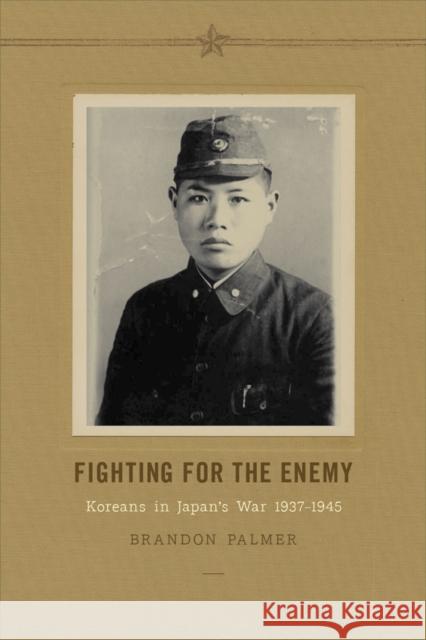
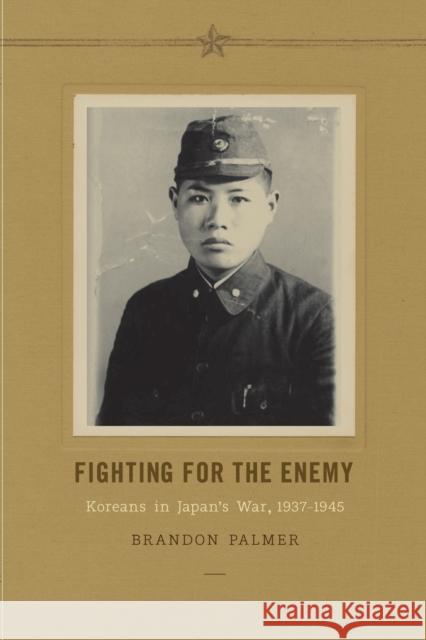
Fighting for the Enemy explores the participation of Koreans in the Japanese military and supporting industries before and during World War II, first through voluntary enlistment and eventually through conscription. Contrary to popular belief among Korean nationalists, this involvement was not entirely coerced. Brandon Palmer examines this ambiguous situation in the context of Japan's long-term colonial effort to assimilate Koreans into Japanese sociopolitical life and documents the many ways Koreans-short of openly resisting-avoided full cooperation with Japanese war...
Fighting for the Enemy explores the participation of Koreans in the Japanese military and supporting industries before and during World War ...
Fighting for the Enemy explores the participation of Koreans in the Japanese military and supporting industries before and during World War II, first through voluntary enlistment and eventually through conscription. Contrary to popular belief among Korean nationalists, this involvement was not entirely coerced. Brandon Palmer examines this ambiguous situation in the context of Japan's long-term colonial effort to assimilate Koreans into Japanese sociopolitical life and documents the many ways Koreans-short of openly resisting-avoided full cooperation with Japanese war...
Fighting for the Enemy explores the participation of Koreans in the Japanese military and supporting industries before and during World War ...
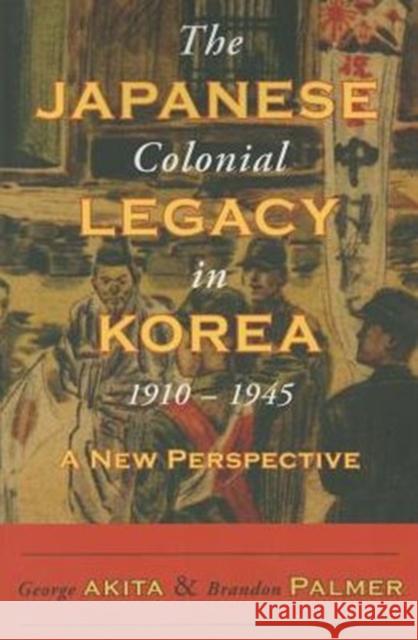
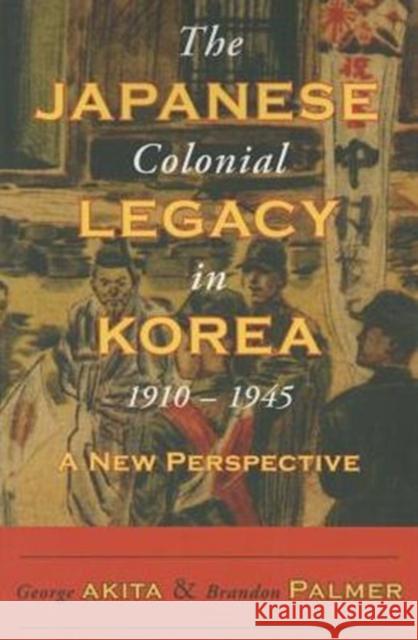
The Japanese Colonial Legacy in Korea reexamines Japan's policies in Korea from 1910 to 1945. The authors contend that Japan's policies were moderate considering the magnitude of the colonial endeavor and were proportional when compared to the imperialist practices of Western nations. Drawing on recent scholarship, this study effectively contributes to the growing field of historical revisionism in Korean colonial history. Historical remembrance in South Korea unabashedly portrays the colonial era in a wholly negative light; The Japanese colonial regime is presented as an authoritarian...
The Japanese Colonial Legacy in Korea reexamines Japan's policies in Korea from 1910 to 1945. The authors contend that Japan's policies were modera...
The Japanese Colonial Legacy in Korea reexamines Japan's policies in Korea from 1910 to 1945. The authors contend that Japan's policies were moderate considering the magnitude of the colonial endeavor and were proportional when compared to the imperialist practices of Western nations. Drawing on recent scholarship, this study effectively contributes to the growing field of historical revisionism in Korean colonial history. Historical remembrance in South Korea unabashedly portrays the colonial era in a wholly negative light; The Japanese colonial regime is presented as an authoritarian...
The Japanese Colonial Legacy in Korea reexamines Japan's policies in Korea from 1910 to 1945. The authors contend that Japan's policies were modera...