While Kierkegaard is perhaps known best as a religious thinker and philosopher, there is an unmistakable literary element in his writings. He often explains complex concepts and ideas by using literary figures and motifs that he could assume his readers would have some familiarity with. This dimension of his thought has served to make his writings far more popular than those of other philosophers and theologians, but at the same time it has made their interpretation more complex. Kierkegaard readers are generally aware of his interest in figures such as Faust or the Wandering Jew, but they...
While Kierkegaard is perhaps known best as a religious thinker and philosopher, there is an unmistakable literary element in his writings. He often ex...
Kierkegaard's Concepts is a comprehensive, multi-volume survey of the key concepts and categories that inform Kierkegaard's writings. Each article is a substantial, original piece of scholarship, which discusses the etymology and lexical meaning of the relevant Danish term, traces the development of the concept over the course of the authorship, and explains how it functions in the wider context of Kierkegaard's thought. Concepts have been selected on the basis of their importance for Kierkegaard's contributions to philosophy, theology, the social sciences, literature and aesthetics, thereby...
Kierkegaard's Concepts is a comprehensive, multi-volume survey of the key concepts and categories that inform Kierkegaard's writings. Each article is ...
While Kierkegaard is perhaps known best as a religious thinker and philosopher, there is an unmistakable literary element in his writings. He often explains complex concepts and ideas by using literary figures and motifs that he could assume his readers would have some familiarity with. This dimension of his thought has served to make his writings far more popular than those of other philosophers and theologians, but at the same time it has made their interpretation more complex. Kierkegaard readers are generally aware of his interest in figures such as Faust or the Wandering Jew, but they...
While Kierkegaard is perhaps known best as a religious thinker and philosopher, there is an unmistakable literary element in his writings. He often ex...
Kierkegaard's Concepts is a comprehensive, multi-volume survey of the key concepts and categories that inform Kierkegaard's writings. Each article is a substantial, original piece of scholarship, which discusses the etymology and lexical meaning of the relevant Danish term, traces the development of the concept over the course of the authorship, and explains how it functions in the wider context of Kierkegaard's thought. Concepts have been selected on the basis of their importance for Kierkegaard's contributions to philosophy, theology, the social sciences, literature and aesthetics, thereby...
Kierkegaard's Concepts is a comprehensive, multi-volume survey of the key concepts and categories that inform Kierkegaard's writings. Each article is ...
This volume is a revised and improved edition of the auction catalogue of Kierkegaard's private library. The catalogue has long served as one of the most valuable tools in Kierkegaard studies and has been actively used by commentators, translators and researchers for tracing the various sources of Kierkegaard's thought. With the catalogue in hand, one can determine with some degree of probability what books he read and what editions he used for his information about specific authors. The present volume represents the fourth printing of the catalogue, and it differs from its predecessors in...
This volume is a revised and improved edition of the auction catalogue of Kierkegaard's private library. The catalogue has long served as one of the m...
One of the elements that many readers admire in Kierkegaard's skill as a writer is his ability to create different voices and perspectives in his works. Instead of unilaterally presenting clear-cut doctrines and theses, he confronts the reader with a range of personalities and figures who all espouse different views. One important aspect of this play of perspectives is Kierkegaard's controversial use of pseudonyms. The present volume is dedicated to exploring the different pseudonyms and authorial voices in Kierkegaard's writing. The articles featured here try to explore each pseudonymous...
One of the elements that many readers admire in Kierkegaard's skill as a writer is his ability to create different voices and perspectives in his work...
Kierkegaard's Concepts is a comprehensive, multi-volume survey of the key concepts and categories that inform Kierkegaard's writings. Each article is a substantial, original piece of scholarship, which discusses the etymology and lexical meaning of the relevant Danish term, traces the development of the concept over the course of the authorship, and explains how it functions in the wider context of Kierkegaard's thought. Concepts have been selected on the basis of their importance for Kierkegaard's contributions to philosophy, theology, the social sciences, literature and aesthetics, thereby...
Kierkegaard's Concepts is a comprehensive, multi-volume survey of the key concepts and categories that inform Kierkegaard's writings. Each article is ...
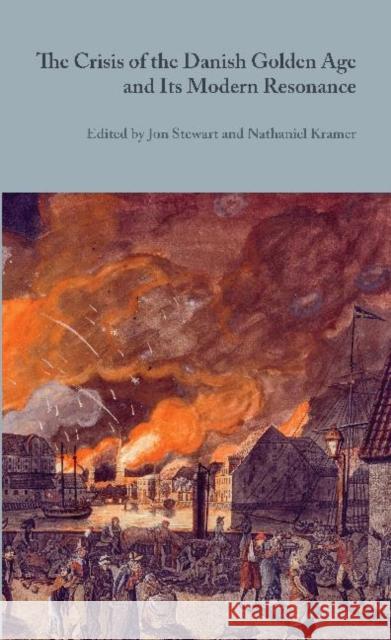
The historical circumstances of the Danish Golden Age are well known: the Napoleonic Wars, the bombardment of Copenhagen, the state bankruptcy in 1814 with the ensuing financial crisis, the Revolution of 1848, and the establishment of a parliamentary democracy in 1849. There were peasant reforms, religious upheavals, and changes in class and social structures. These events constituted the milieu in which the Golden Age was born and developed. The guiding idea of the present volume is that these different crises served not just as a backdrop or as obstacles but rather as catalysts for the...
The historical circumstances of the Danish Golden Age are well known: the Napoleonic Wars, the bombardment of Copenhagen, the state bankruptcy in 1814...