This first volume of The Cambridge History of the First World War provides a comprehensive account of the war's military history. An international team of leading historians charts how a war made possible by globalization and imperial expansion unfolded into catastrophe, growing year by year in scale and destructive power far beyond that which anyone had anticipated in 1914. Adopting a global perspective, the volume analyses the spatial impact of the war and the subsequent ripple effects that occurred both regionally and across the world. It explores how imperial powers devoted vast reserves...
This first volume of The Cambridge History of the First World War provides a comprehensive account of the war's military history. An international tea...
Volume 2 of The Cambridge History of the First World War offers a history of the war from a predominantly political angle and concerns itself with the story of the state. It explores the multifaceted history of state power and highlights the ways in which different political systems responded to, and were deformed by, the near-unbearable pressures of war. Every state involved faced issues of military-civilian relations, parliamentary reviews of military policy, and the growth of war economies; and yet their particular form and significance varied in every national case. Written by a global...
Volume 2 of The Cambridge History of the First World War offers a history of the war from a predominantly political angle and concerns itself with the...
Volume 3 of The Cambridge History of the First World War explores the social and cultural history of the war and considers the role of civil society throughout the conflict; that is to say those institutions and practices outside the state through which the war effort was waged. Drawing on 25 years of historical scholarship, it sheds new light on culturally significant issues such as how families and medical authorities adapted to the challenges of war and the shift that occurred in gender roles and behaviour that would subsequently reshape society. Adopting a transnational approach, this...
Volume 3 of The Cambridge History of the First World War explores the social and cultural history of the war and considers the role of civil society t...
The world's population has grown by five billion people over the past century, an astounding 300 percent increase. Yet it is actually the decline in family size and population growth that is the issue attracting greatest concern in many countries. This eye-opening book looks at demographic trends in Europe, North America, and Asia--areas that now have low fertility rates--and argues that there is an essential yet often neglected political dimension to a full assessment of these trends. Political decisions that promote or discourage marriage and childbearing, facilitate or discourage...
The world's population has grown by five billion people over the past century, an astounding 300 percent increase. Yet it is actually the decline i...
In late 2007 and early 2008, world-renowned historians gathered in Kansas City for a series of public forums on World War I. Each of the five events focused on a particular topic and featured spirited dialogue between its prominent participants.In spontaneous exchanges, the eminent scholars probed each other s arguments, learned from each other, and provided insights not just into history but also into the way scholars think about their subject alongside and at times in conflict with their colleagues. Representing a fourth generation of writers on the Great War and a transnational rather...
In late 2007 and early 2008, world-renowned historians gathered in Kansas City for a series of public forums on World War I. Each of the five even...
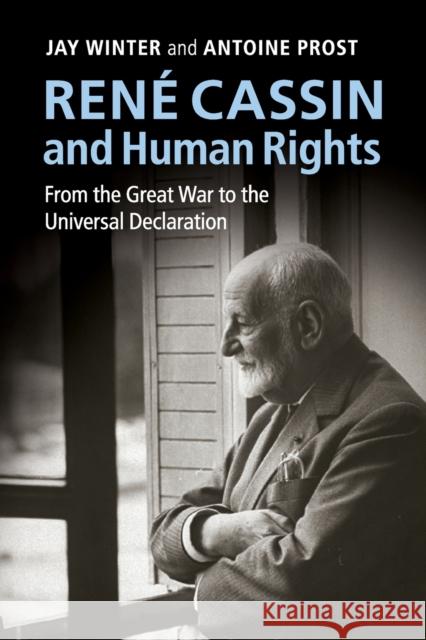
Through the life of one extraordinary man, this biography reveals what the term human rights meant to the men and women who endured two world wars, and how this major political and intellectual movement ultimately inspired and enshrined the Universal Declaration of Human Rights. Rene Cassin was a man of his generation, committed to moving from war to peace through international law, and whose work won him the Nobel Peace Prize in 1968. His life crossed all the major events of the first seventy years of the twentieth century, and illustrates the hopes, aspirations, failures and achievements of...
Through the life of one extraordinary man, this biography reveals what the term human rights meant to the men and women who endured two world wars, an...
Jay Winter's powerful study of the 'collective remembrance' of the Great War offers a major reassessment of one of the critical episodes in the cultural history of the twentieth century. Dr Winter looks anew at the culture of commemoration and the ways in which communities endeavoured to find collective solace after 1918. Taking issue with the prevailing 'modernist' interpretation of the European reaction to the appalling events of 1914 18, Dr Winter instead argues that what characterised that reaction was, rather, the attempt to interpret the Great War within traditional frames of reference....
Jay Winter's powerful study of the 'collective remembrance' of the Great War offers a major reassessment of one of the critical episodes in the cultur...