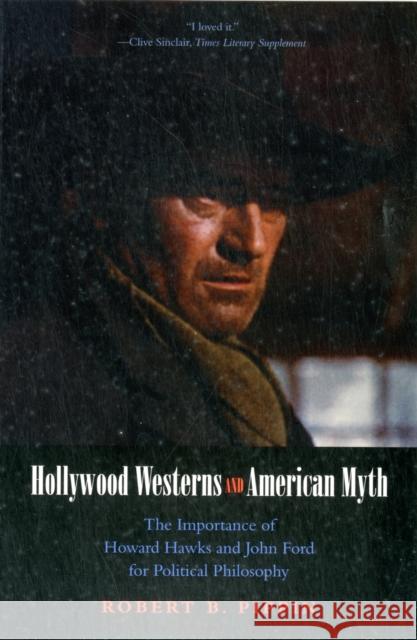
In this pathbreaking book one of America's most distinguished philosophers brilliantly explores the status and authority of law and the nature of political allegiance through close readings of three classic Hollywood Westerns: Howard Hawks' Red River and John Ford's The Man Who Shot Liberty Valance and The Searchers.
Robert Pippin treats these films as sophisticated mythic accounts of a key moment in American history: its "second founding," or the western expansion. His central question concerns how these films explore classical problems in political psychology,...
In this pathbreaking book one of America's most distinguished philosophers brilliantly explores the status and authority of law and the nature of p...
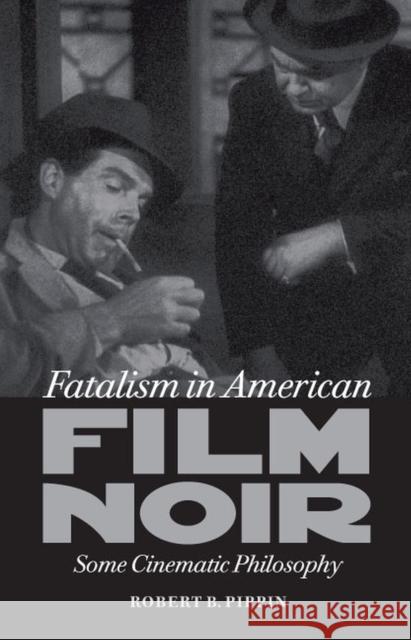
The crime melodramas of the 1940s known now as film noir shared many formal and thematic elements, from unusual camera angles and lighting to moral ambiguity and femmes fatales. In this book Robert Pippin argues that many of these films also raise distinctly philosophical questions. Where most Hollywood films of that era featured reflective individuals living with purpose, taking action and effecting desired consequences, the typical noir protagonist deliberates and plans, only to be confronted by the irrelevance of such deliberation and by results that contrast sharply, often tragically,...
The crime melodramas of the 1940s known now as film noir shared many formal and thematic elements, from unusual camera angles and lighting to moral...