Although television has developed into a major agent of the transnational and global flow of information and entertainment, television historiography and scholarship largely remains a national endeavour, partly due to the fact that television has been understood as a tool for the creation of national identity. But the breaking of the quasi-monopoly of public service broadcasters all over Europe in the 1980s has changed the television landscape, and cross-border television channels - with the help of satellite and the Internet - have catapulted the relatively closed television nations into the...
Although television has developed into a major agent of the transnational and global flow of information and entertainment, television historiography ...
"This exciting book goes to the heart of a creative commercial and public service culture - it shows why ITV matters and how it was made to work so well. A tremendous contribution." Professor Jean Seaton, University of Westminster
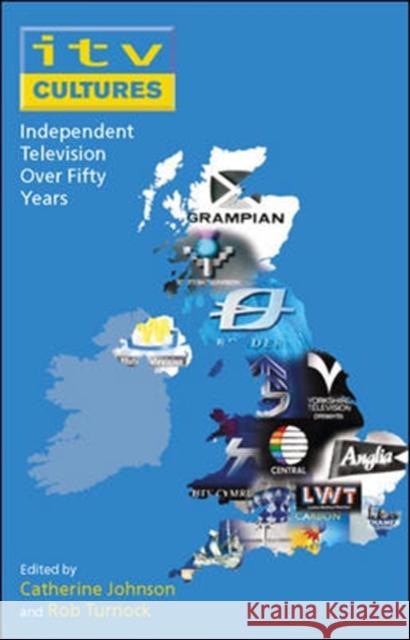
"This is a valuable addition to studies of ITV's history and programming..." Tom O'Malley, Professor of Media Studies, University of Wales, Aberyswyth, and Co-Editor of "Media History." Since breaking the BBC's monopoly in 1955, ITV has been at the centre of the British television landscape. To coincide with the fiftieth anniversary of the first ITV...
"This exciting book goes to the heart of a creative commercial and public service culture - it shows why ITV matters and how it was made to work so we...
Branding Television examines why and how the UK and US television industries have turned towards branding as a strategy in response to the rise of satellite, cable and digital television, and new media, such as the internet and mobile phone.
This is the first book to offer a sustained critical analysis of this new cultural development. Branding Television examines the industrial, regulatory and technological changes since the 1980s in the UK and the USA that have led to the adoption of branding as broadcasters have attempted to manage the behaviour...
Branding Television examines why and how the UK and US television industries have turned towards branding as a strategy i...
Telefantasyis the first book-length study to consider the place of fantasy, science fiction, and horror dramas in the history of British and U.S. television. Looking at two periods--the 1950s and 1960s, and the 1990s and 2000s--when telefantasy was particularly prevalent on television, this book provides detailed historical accounts of the production of key telefantasy programs: the Quatermass serials, The Prisoner, Star Trek, The X-Files, Buffy the Vampire Slayer, andRandall and Hopkirk.
Telefantasyengages with current debates about television history,...
Telefantasyis the first book-length study to consider the place of fantasy, science fiction, and horror dramas in the history of British and U....
From the trailers and promos that surround film and television to the ads and brand videos that are sought out and shared, promotional media have become a central part of contemporary screen life. Promotional Screen Industries is the first book to explore the sector responsible for this thriving area of media production.
In a wide-ranging analysis, Paul Grainge and Catherine Johnson explore the intermediaries - advertising agencies, television promotion specialists, movie trailer houses, digital design companies - that compete and collaborate in the fluid, fast-moving world...
From the trailers and promos that surround film and television to the ads and brand videos that are sought out and shared, promotional media have b...