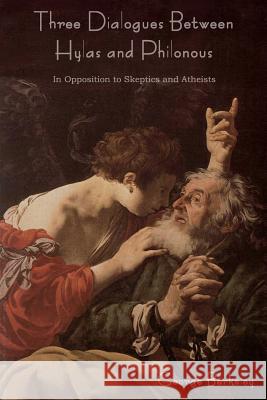
A philosophical exploration in the form of a classical dialogue such as Aristotle or his pupils might have written, these fanciful-and imaginary-debates pit Philonous, representing author Berkeley, against Hylas, generally accepted to represent Berkeleys adversary in British empiricism John Locke. Matters of skepticism, perception, materialism, and more are discussed in entertaining and enlightening fashion.
First published in 1713, this is a curious artifact of an earlier age of philosophy that will bemuse and amuse readers of classic literature.
Irish scientist, philosopher, and writer...
A philosophical exploration in the form of a classical dialogue such as Aristotle or his pupils might have written, these fanciful-and imaginary-debat...
This scarce antiquarian book is a facsimile reprint of the original. Due to its age, it may contain imperfections such as marks, notations, marginalia and flawed pages. Because we believe this work is culturally important, we have made it available as part of our commitment for protecting, preserving, and promoting the world's literature in affordable, high quality, modern editions that are true to the original work.
This scarce antiquarian book is a facsimile reprint of the original. Due to its age, it may contain imperfections such as marks, notations, marginalia...
Berkeley's Three Dialogues are presented with a substantial introduction and critical apparatus that make it an edition that is particularly well-suited to the classroom.
Berkeley's Three Dialogues are presented with a substantial introduction and critical apparatus that make it an edition that is particularly well-suit...
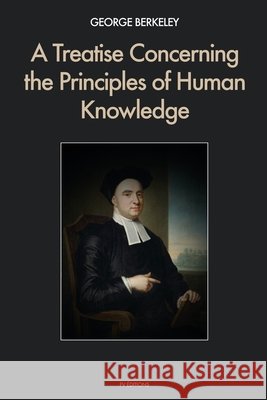
George Berkeley also known as Bishop Berkeley, was an Anglo-Irish philosopher whose primary achievement was the advancement of a theory he called "immaterialism" (later referred to as "subjective idealism" by others). This theory contends that individuals can only know directly sensations and ideas of objects, not abstractions such as "matter." The theory also contends that ideas are dependent upon being perceived by minds for their very existence, a belief that became immortalized in the dictum, "Esse est percipi" ("To be is to be perceived"). His most widely-read works are A Treatise...
George Berkeley also known as Bishop Berkeley, was an Anglo-Irish philosopher whose primary achievement was the advancement of a theory he called "imm...
Diese erkenntnispsychologische Studie uber das Verhaltnis von Gesichts- und Tastwahrnehmung war Berkeleys erste grosse Publikation (1709). Im Vordergrund steht noch nicht die Immaterialismusthese, sondern die Wahrnehmungsanalyse. Logisch wie auch chronologisch kann der Text als Einfuhrung in Berkeleys Lehre gelten. Unveranderter Print-on-Demand-Nachdruck der Ausgabe von 1987."
Diese erkenntnispsychologische Studie uber das Verhaltnis von Gesichts- und Tastwahrnehmung war Berkeleys erste grosse Publikation (1709). Im Vordergr...