Cambridge Literature is a series of literary texts edited for study by students aged 14-18 in English-speaking classrooms. It will include novels, poetry, short stories, essays, travel-writing and other non-fiction. The series will be extensive and open-ended and will provide school students with a range of edited texts taken from a wide geographical spread. It will feature writing in English from various genres and differing times. Silas Marner by George Eliot is edited by Mary Bousted of the University of York.
Cambridge Literature is a series of literary texts edited for study by students aged 14-18 in English-speaking classrooms. It will include novels, poe...
Silas Marner: The Weaver of Raveloe is the third novel penned by George Eliot, a pseudonym for Victorian author Mary Anne Evans, first published in England in 1861. It is a dramatic tale of a reclusive weaver, which in strong realism depicts the author's sophisticated treatments of her attitude toward religion. In a script set in the early 19th century, Silas Marner is a member of a small Calvinist congregation in Lantern Yard, a slum street in an unnamed city in the North of England. He is falsely accused of stealing the congregation's funds while caring for a very ill deacon. A pocket-knife...
Silas Marner: The Weaver of Raveloe is the third novel penned by George Eliot, a pseudonym for Victorian author Mary Anne Evans, first published in En...
'Many men write well and tell a story well, but few possess the art of giving individuality to their characters so happily and easily as you ...'
Wrote the publisher John Blackwood in February 1857 to a shy and ambitious new author, whom he had not yet met, George Eliot. Shielded by this pseudonymn, Mary Ann Evans made her fictional debut when Scenes of Clerical Life appeared in Blackwood's Magazine the same year. These are Eliot's earliest studies of what became enduring themes: the impact of religious controversy and social change in provincial life, and the power of love to transform...
'Many men write well and tell a story well, but few possess the art of giving individuality to their characters so happily and easily as you ...'
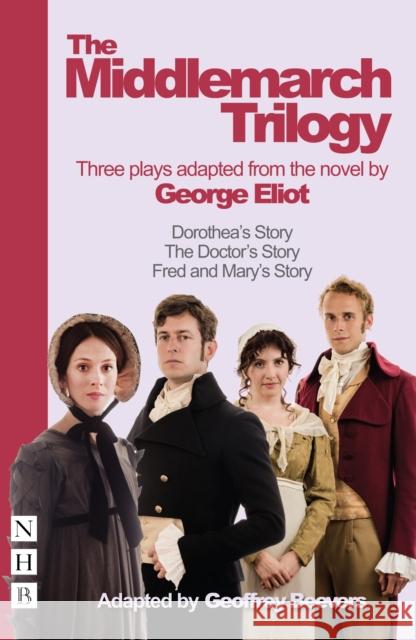
Three plays based on George Eliot's classic novel, which can be performed as a trilogy or as standalone pieces. George Eliot's Middlemarch is peopled with some of literature's most memorable characters. In Geoffrey Beevers' new dramatisation, all three interconnected plays can be performed as a trilogy, but each play can also stand on its own, telling the story of Middlemarch from the perspective of a different set of characters: from county, town and countryside. In Dorothea's Story, set among the big houses of the local aristocracy of Middlemarch, young,...
Three plays based on George Eliot's classic novel, which can be performed as a trilogy or as standalone pieces. George Eliot's Middlemarch ...