Henry James Francis Otto Matthiessen Kenneth B. Murdock
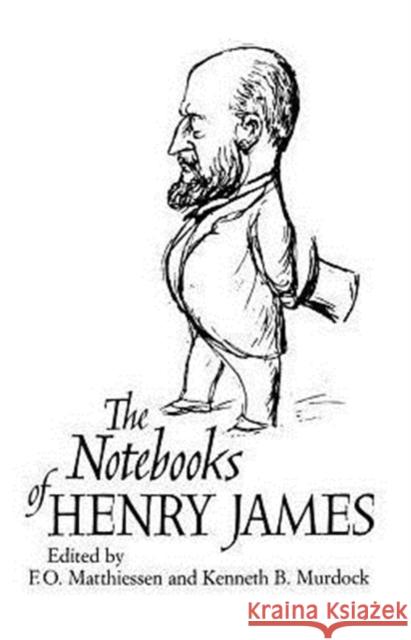
"For other novelists the value of Henry James's Notebooks is immense and to brood over them a major experience. The glow of the great impresario is on the pages. They are occasionally readable and endlessly stimulating, often moving and are ocasionally relieved by a drop of gossip."-V. S. Pritchett, New Statesman "The Notebooks take us into his study, and here we can observe him, at last, in the very act of creation at his writing table."-Leon Edel, Atlantic Monthly "A document of prime importance."-Edmund Wilson, New Yorker
"For other novelists the value of Henry James's Notebooks is immense and to brood over them a major experience. The glow of the great impresari...
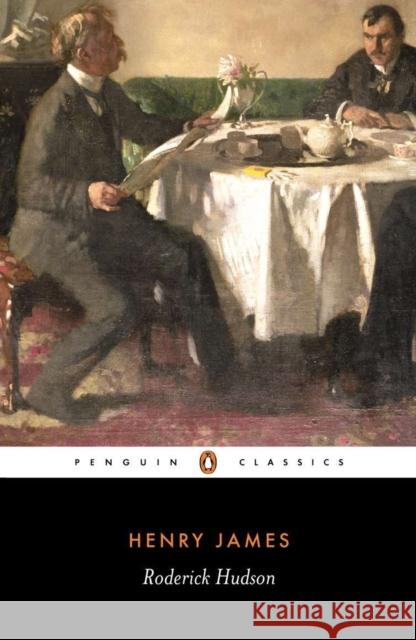
When wealthy Rowland Mallet first sees a sculpture by Roderick Hudson, he is astounded and pronounces it to be a work of genius, and is equally entranced by the sculptor's beauty, spirit and charisma. Wishing to give the impoverished artist the opportunity to develop his talent, he takes Roderick from America to Rome, where he becomes the talk of the city. But Roderick soon loses his inspiration and Rowland loses control of his protege, while both fall in love with women they cannot ever have. Can Roderick be saved from the path to self-destruction he seems set on? One of Henry James's first...
When wealthy Rowland Mallet first sees a sculpture by Roderick Hudson, he is astounded and pronounces it to be a work of genius, and is equally entran...
Features Nick Dormer, the young Englishman who, during the course of the novel, will courageously resist the glittering Parliamentary career desired for him by his family, in order to paint. His progress is counterpointed by the 'Tragic Muse' of the title, Miriam Rooth, a great actress indifferent to social reputation, and dedicated to her art.
Features Nick Dormer, the young Englishman who, during the course of the novel, will courageously resist the glittering Parliamentary career desired f...
"The charm of certain vacant grassy spaces, in Italy, overfrowned by masses of brickwork that are honeycombed by the suns of centuries, is something that I hereby renounce once for all the attempt to express; but you may be sure that whenever I mention such a spot enchantment lurks in it." --Henry James In these essays on travels in Italy written from 1872 to 1909, Henry James explores art and religion, political shifts and cultural revolutions, and the nature of travel itself. James's enthusiastic appreciation of the unparalleled aesthetic allure of Venice, the vitality of Rome,...
"The charm of certain vacant grassy spaces, in Italy, overfrowned by masses of brickwork that are honeycombed by the suns of centuries, is somethin...
"The Author on His Craft" again reprints James's critical essay "The Art of Fiction" and related passages from his notebooks, including a new passage on "In the Cage." "Criticism" has been entirely updated and includes ten new essays by critics who during the last twenty-five years have helped to establish the lines of debate about James's tales. An updated Selected Bibliography is also included.
"The Author on His Craft" again reprints James's critical essay "The Art of Fiction" and related passages from his notebooks, including a new passage ...