This report analyzes future energy market options for Central Asia Regional Economic Cooperation (CAREC) program members to help facilitate sustainable energy infrastructure investment. The report provides forecasts at individual country and regional levels. It aims to equip investors and policy makers with insights on regional trends to help identify potential investment opportunities that will improve energy services and reduce carbon emissions across CAREC countries. It includes energy supply and demand scenarios, assessments of innovative technologies, estimates of investment needs in...
This report analyzes future energy market options for Central Asia Regional Economic Cooperation (CAREC) program members to help facilitate sustainabl...
This publication shares findings on how to better estimate the impact of development assistance on job creation. It shares findings from a study that used input–output and computable general equilibrium models to customize estimation methods to improve jobs impact assessments. The study used 2010–2019 data on Asian Development Bank operations in Fiji, Indonesia, and Thailand. Its findings suggest that simpler input–output models may best suit projects that support substantial local purchases of non-construction capital goods and services. More comprehensive and data-intensive...
This publication shares findings on how to better estimate the impact of development assistance on job creation. It shares findings from a study that...
This publication analyzes how Uzbekistan can overhaul its technical and vocational education and training to build the digitally literate, skilled workforce needed to drive business and boost the economy. It offers a rundown of Uzbekistan's education system and explores how to incorporate technical skills while making the existing workforce more digitally proficient. It discusses how closer private sector ties would make training more relevant. Highlighting the need for comprehensive data on labor market needs, it outlines steps including updating curriculums, increasing training for...
This publication analyzes how Uzbekistan can overhaul its technical and vocational education and training to build the digitally literate, skilled wor...
In this report, ADB has lowered its forecasts for economic growth in developing Asia and the Pacific to 4.3% in 2022 and 4.9% in 2023, amid mounting challenges. Its theme chapter looks at how digital entrepreneurship spurs growth and innovation. The region's economy is expected to grow 4.3% this year, compared with ADB's projection in April of a 5.2% expansion, while the growth forecast for next year is lowered to 4.9% from 5.3%. The downward revisions have been driven by increased monetary tightening by central banks, fallout from the protracted Russian invasion of Ukraine, and recurrent...
In this report, ADB has lowered its forecasts for economic growth in developing Asia and the Pacific to 4.3% in 2022 and 4.9% in 2023, amid mounting c...
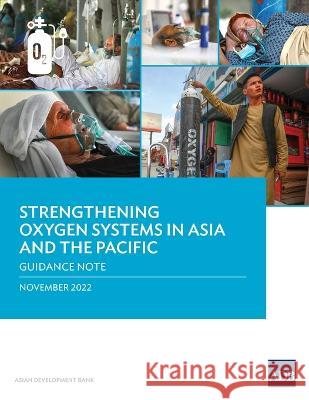
This guidance note provides a comprehensive overview of medical oxygen production, distribution, and use in Asia and the Pacific region, and explores how to improve systems over the medium and long term. It explains why surges in medical oxygen demand due to the COVID-19 pandemic have exacerbated deficiencies in oxygen systems. It highlights how greater coordination among stakeholders to plan and procure oxygen on a larger scale, improve equipment, and better train staff can dramatically benefit health systems and improve patient care.
This guidance note provides a comprehensive overview of medical oxygen production, distribution, and use in Asia and the Pacific region, and explores ...
Under Strategy 2030, the Asian Development Bank (ADB) is committed to state-owned enterprise (SOE) reform in its developing member countries (DMCs). The publication reviews the significance of SOEs in Asia and the Pacific, the role of SOE reform in ADB's strategy, and related requirements for nonsovereign and One ADB projects. Nonsovereign financing for SOEs can help reduce the burden of sovereign debt and mobilize new funding for vital investments, including climate change mitigation. Designed to guide ADB staff in their work with SOEs through sovereign projects, policy-based loans, and...
Under Strategy 2030, the Asian Development Bank (ADB) is committed to state-owned enterprise (SOE) reform in its developing member countries (DMCs). ...
This report outlines nontariff barriers to trade between BISMSTEC subregion countries and shows how a structured approach centered on boosting compliance, harnessing technology, and improving infrastructure can bolster intraregional trade. It gives a run-down of the trade infrastructure and regulations of each member country–Thailand, India, Bangladesh, Myanmar, Sri Lanka, Bhutan and Nepal–outlines the constraints each faces and details progress made to date. Explaining how the region is recovering from the pandemic, it shows how factors such as faster clearing, stronger mutual...
This report outlines nontariff barriers to trade between BISMSTEC subregion countries and shows how a structured approach centered on boosting complia...