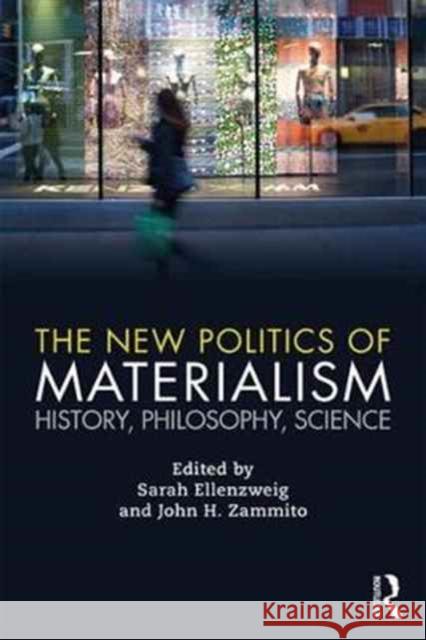
New materialism challenges the mechanistic models characteristic of early modern philosophy that regarded matter as largely passive and inert. Instead it gives weight to topics often overlooked in such accounts: agency, vitalism, complexity, contingency, and self-organization.
This collection, which includes an international roster of contributors from philosophy, history, literature, and science, is the first to ask what is "new" about the new materialism and place it in interdisciplinary perspective. Against current theories of new materialism it argues for a deeper...
New materialism challenges the mechanistic models characteristic of early modern philosophy that regarded matter as largely passive and inert. Inst...
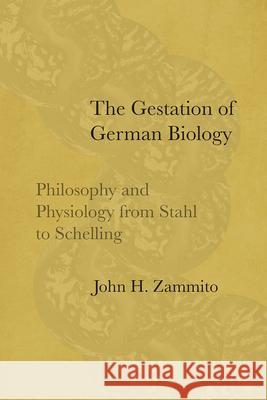
The emergence of biology as a distinct science in the eighteenth century has long been a subject of scholarly controversy. Michel Foucault, on the one hand, argued that its appearance only after 1800 represented a fundamental rupture with the natural history that preceded it, marking the beginnings of modernity. Ernst Mayr, on the other hand, insisted that even the word "biology" was unclear in its meaning as late as 1800, and that the field itself was essentially prospective well into the 1800s. In The Gestation of German Biology, historian of ideas John Zammito presents a...
The emergence of biology as a distinct science in the eighteenth century has long been a subject of scholarly controversy. Michel Foucault, on the one...