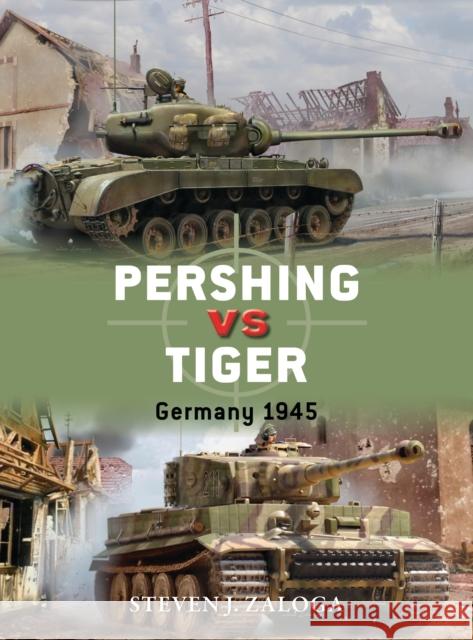
During the final battles on World War II's Western Front, the legendary German Tiger I heavy tank clashed with the brand-new M26 Pershing fielded by the United States. The Tiger I had earned a formidable reputation by the end of 1944, although its non-sloped armor and poor mobility meant it was being superseded by the Tiger II or "King Tiger." While the Tiger I had been in the front lines since 1942, the US Pershing first entered combat in late February 1945, and more than 20 Pershings would see action before war's end.
This book examines the dramatic Tiger/Pershing duel at Elsdorf...
During the final battles on World War II's Western Front, the legendary German Tiger I heavy tank clashed with the brand-new M26 Pershing fielded b...
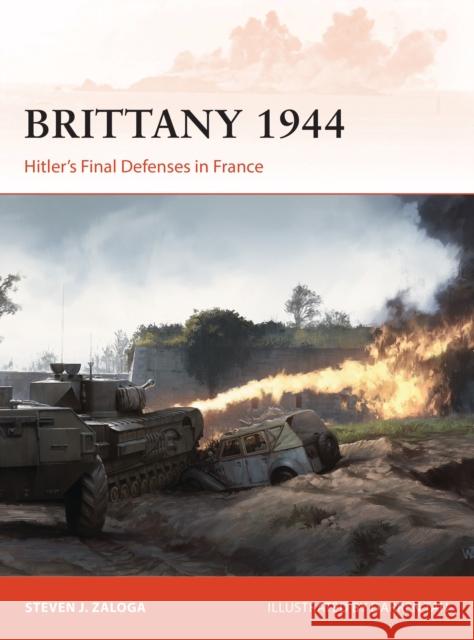
One of the prime objectives for the Allies following the D-Day landings was the capture of sufficient ports to supply their armies. The original Overlord plans assumed that ports along the Breton coast would be essential to expansion of the Normandy beach-head. This included the major ports at Brest and on Quiberon Bay.
The newly arrived Third US Army (TUSA) under Lt. Gen. George S. Patton was delegated to take on the Brittany mission. In one of the most rapid mechanized advances of the war, TUSA had the ports of Avranches and Quiberon encircled by the second week of August...
One of the prime objectives for the Allies following the D-Day landings was the capture of sufficient ports to supply their armies. The original Ov...