The great philosopher and historian of philosophy, Etienne Gilson, sets out to show that final causality or purposiveness and formal causality are principles for those who think hard and carefully about the world, including the world of biology. Gilson insists that a completely rational understanding of organisms and biological systems requires the philosophical notion of teleology, the idea that certain kinds of things exist and have ends or purposes the fulfillment of which are linked to their natures-in other words, formal and final causes. His approach relies on philosophical reflection...
The great philosopher and historian of philosophy, Etienne Gilson, sets out to show that final causality or purposiveness and formal causality are pri...
The dual purpose of this volume-to provide a distinctively philosophical introduction to logic, as well as a logic-oriented approach to philosophy-makes it a unique and worthwhile primary text for logic or philosophy courses.
The dual purpose of this volume-to provide a distinctively philosophical introduction to logic, as well as a logic-oriented approach to philosophy-mak...
In this final edition of his classic study of St. Thomas Aquinas, Etienne Gilson presents the sweeping range and organic unity of Thomistic philosophical thought. Gilson demonstrates that Aquinas drew from a wide spectrum of sources in the development of his thought-from Aristotle, to the Arabic and Jewish philosophers of his time, as well as from Christian writers. What results is an insightful introduction to the thought of Aquinas and the Scholastic philosophy of the Middles Ages.
In this final edition of his classic study of St. Thomas Aquinas, Etienne Gilson presents the sweeping range and organic unity of Thomistic philosophi...
In this book (a translation of his well-known work L'esprit de la philosophie medievale), Etienne Gilson undertakes the task of defining the spirit of mediaeval philosophy. Gilson asks whether we can form the concept of a Christian philosophy and whether mediaeval philosophy is not its most adequate historical expression. He maintains that the spirit of mediaeval philosophy is the spirit of Christianity penetrating the Greek tradition, working within it, and drawing out of it a certain view of the world that is specifically Christian. To support his hypothesis, Gilson examines mediaeval...
In this book (a translation of his well-known work L'esprit de la philosophie medievale), Etienne Gilson undertakes the task of defining the spirit of...
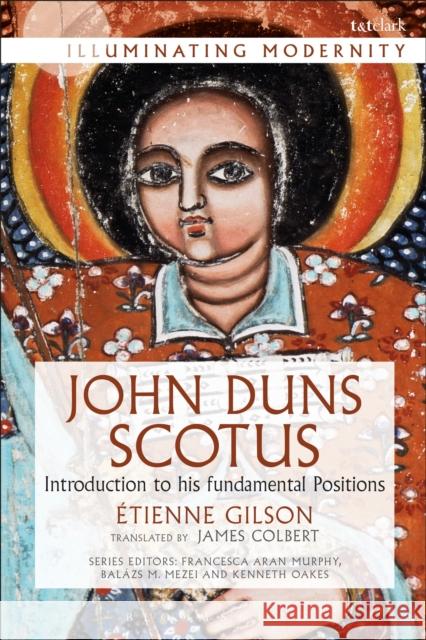
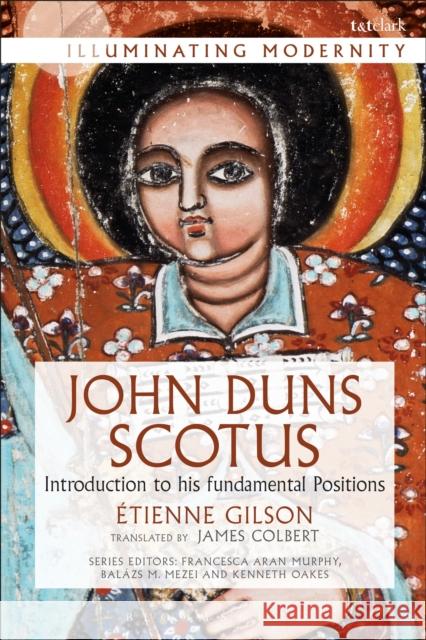
Etienne Gilson's Jean Duns Scot: Introduction a ses positions fondamentales is widely understood to be one of the most important works on John Duns Scotus' texts, which are famous for their complexity. This volume is the first translation into English, with an introduction by Trent Pomplun and an Afterword by John Millbank. John Duns Scotus is known for his work in natural theology and this work offers a comprehensive introduction to the fundamental positions he stood for. Scotus contributed to the development of a metaphysical system that was compatible with...
Etienne Gilson's Jean Duns Scot: Introduction a ses positions fondamentales is widely understood to be one of the most importa...