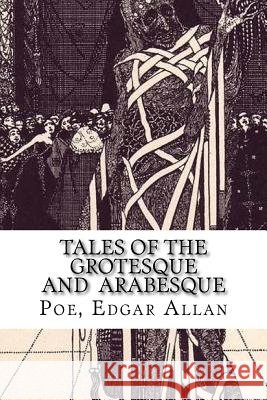
When its publication was announced in Burton's Gentleman's Magazine, its one-line description said that its title "pretty well indicates their stories'] character." There has been some debate, however, over the meaning of Poe's terms "Grotesque" and "Arabesque." Poe probably had seen the terms used by Sir Walter Scott in his essay "On the Supernatural in Fictitious Composition." Both terms refer to a type of Islamic art used to decorate walls, especially in mosques. These art styles are known for their complex nature.
When its publication was announced in Burton's Gentleman's Magazine, its one-line description said that its title "pretty well indicates their storie...
The story, set on Sullivan's Island, South Carolina, is often compared with Poe's "tales of ratiocination" as an early form of detective fiction. Poe became aware of the public's interest in secret writing in 1840 and asked readers to challenge his skills as a code-breaker. He took advantage of the popularity of cryptography as he was writing "The Gold-Bug," and the success of the story centers on one such cryptogram. The characterization of Legrand's servant Jupiter has been criticized as racist from a modern perspective, especially because his speech is written in dialect and because of his...
The story, set on Sullivan's Island, South Carolina, is often compared with Poe's "tales of ratiocination" as an early form of detective fiction. Poe ...
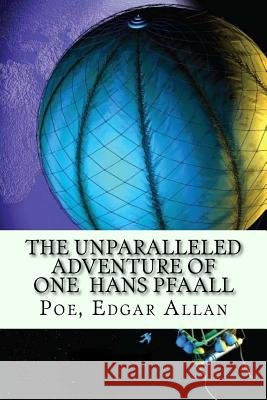
The story opens with the delivery to a crowd gathered in Rotterdam of a manuscript detailing the journey of a man named Hans Pfaall. The manuscript, which comprises the majority of the story, sets out in detail how Pfaall contrived to reach the moon by benefit of a revolutionary new balloon and a device which compresses the vacuum of space into breathable air. The journey takes him nineteen days, and the narrative includes descriptions of the Earth from space as well as the descent to its fiery, volcanic satellite.
The story opens with the delivery to a crowd gathered in Rotterdam of a manuscript detailing the journey of a man named Hans Pfaall. The manuscript, w...
"The Mystery of Marie Roget," often subtitled A Sequel to "The Murders in the Rue Morgue," is a short story by Edgar Allan Poe written in 1842. This is the first murder mystery based on the details of a real crime. It first appeared in Snowden's Ladies' Companion in three installments, November and December 1842 and February 1843. Poe's detective character C. Auguste Dupin and his sidekick the unnamed narrator undertake the unsolved murder of Marie Roget in Paris. The body of Roget, a perfume shop employee, is found in the Seine River and the press takes a keen interest in the mystery. Dupin...
"The Mystery of Marie Roget," often subtitled A Sequel to "The Murders in the Rue Morgue," is a short story by Edgar Allan Poe written in 1842. This i...