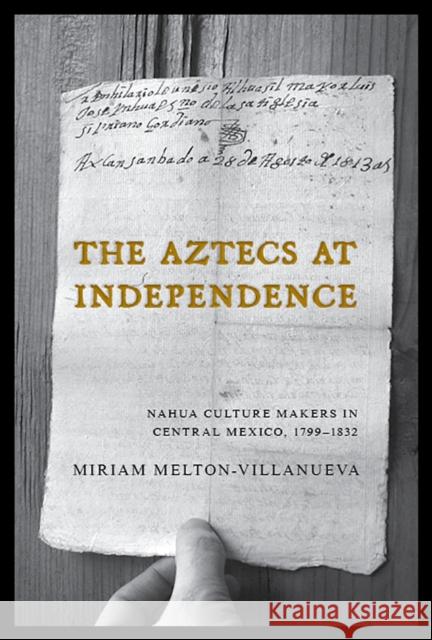
Nahuatl-speaking women and men left last wills in their own tongue during an era when the written tradition of their language was generally assumed to have ended. Describing their world in testaments clustered around epidemic cycles, they responded to profound changes in population, land use, and local governance with astonishing vibrancy. The Aztecs at Independence offers the first internal ethnographic view of these central Mexican indigenous communities in the critical transitional time of Independence. Miriam Melton-Villanueva uses previously unknown Nahuatl-language...
Nahuatl-speaking women and men left last wills in their own tongue during an era when the written tradition of their language was generally assumed to...