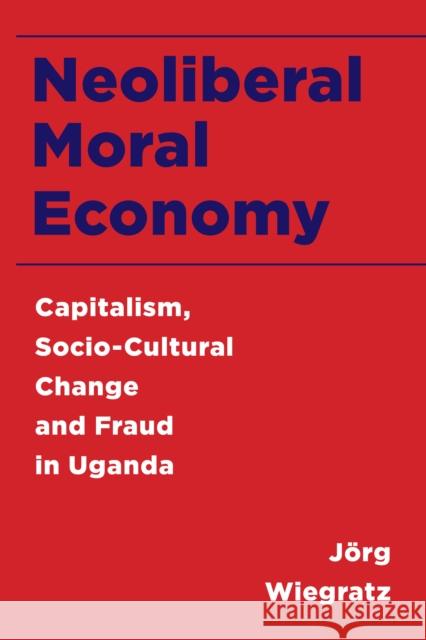
This book offers a fresh take on a major question of global debate: what explains the rise in economic fraud in so many societies around the world? The author argues that the current age of fraud is an outcome of not only political-economic but also moral transformations that have taken place in societies reshaped by neoliberalism. Using the case of Uganda, the book traces these socio-cultural and especially moral repercussions of embedding neoliberalism. Uganda offers an important case of investigation for three reasons: the high level of foreign intervention by donors, aid agencies,...
This book offers a fresh take on a major question of global debate: what explains the rise in economic fraud in so many societies around the world? Th...
This book offers a fresh take on a major question of global debate: what explains the rise in economic fraud in so many societies around the world? The author argues that the current age of fraud is an outcome of not only political-economic but also moral transformations that have taken place in societies reshaped by neoliberalism. Using the case of Uganda, the book traces these socio-cultural and especially moral repercussions of embedding neoliberalism. Uganda offers an important case of investigation for three reasons: the high level of foreign intervention by donors, aid agencies,...
This book offers a fresh take on a major question of global debate: what explains the rise in economic fraud in so many societies around the world? Th...