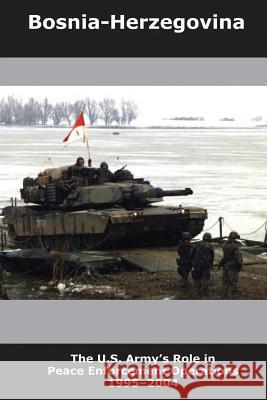
Bosnia-Herzegovina was the scene for the most violent armed conflict in Europe since World War II. The collapse of the Berlin Wall in 1989 marked the end of the Soviet Empire and its forcible control of Eastern Europe. Even as the Soviet Union was breaking apart and its satellite states were shedding the vestiges of Communist rule, the nonaligned Socialist Federal Republic of Yugoslavia also showed cracks in its national structure. Comprised of six "republics" and two autonomous regions, Yugoslavia had created a favorable impression throughout the world as a model state with diverse ethnic...
Bosnia-Herzegovina was the scene for the most violent armed conflict in Europe since World War II. The collapse of the Berlin Wall in 1989 marked the ...