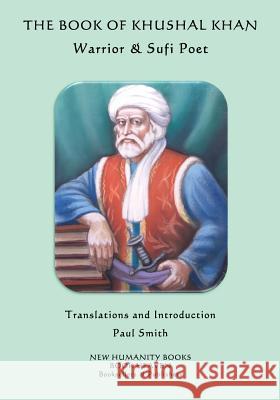
THE BOOK OF KHUSHAL KHAN Warrior & Sufi Poet Translation & Introduction Paul Smith Khushal Khan (1613-1689) was a Pashtun poet, warrior, and chief of the Khattak tribe. He wrote in Pashtu during the reign of the Mughals and fought the fanatic Aurangzeb and admonished Afghans to forsake their divisive tendencies and unite. He was the father of fifty-seven sons, some of them fine poets and thirty daughters. He is the author of over 200 works in Pashtu and Persian, consisting of Poetry, Medicine, Ethics, Religious Jurisprudence, Philosophy, Falconry, etc., together with an account of the events...
THE BOOK OF KHUSHAL KHAN Warrior & Sufi Poet Translation & Introduction Paul Smith Khushal Khan (1613-1689) was a Pashtun poet, warrior, and chief of ...
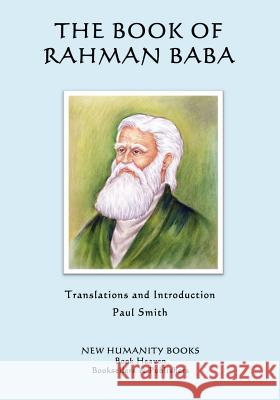
THE BOOK OF RAHMAN BABA Translation & Introduction Paul Smith Rahman Baba (1652 to 1711) is considered the greatest Sufi Pashtun poets to compose poems, mainly ghazals, in the Pashtu language. Born in Mohmand region of Afghanistan near Peshawar he was called 'The Nightingale of Peshawar'. This was a time of struggle and hardship and in the midst of the turmoil he was an excellent student with a natural gift for poetry. He eventually questioned the value of such pursuits and withdrew from the world, dedicating himself to prayer and devotion. In solitary worship he began to write again and his...
THE BOOK OF RAHMAN BABA Translation & Introduction Paul Smith Rahman Baba (1652 to 1711) is considered the greatest Sufi Pashtun poets to compose poem...
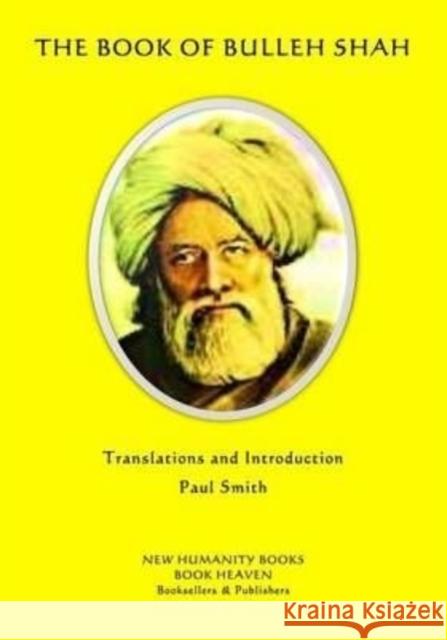
THE BOOK OF BULLEH SHAH Translation & Introduction Paul Smith Bulleh Shah (1680-1758) was a Sufi poet who composed in Punjabi and settled in Kasur, now in Pakistan. His Spiritual Master was Shah Inayat. The poetic form Bulleh Shah is called the Kafi, a style of Punjabi poetry used not only by the Sufis of Sindh and Punjab, but also by Sikh gurus. His poetry and philosophy strongly criticizes the Islamic religious orthodoxy of his day. His time was marked with communal strife between Muslims and Sikhs. But in that age Bulleh Shah was a beacon of hope and peace for the citizens of the Punjab....
THE BOOK OF BULLEH SHAH Translation & Introduction Paul Smith Bulleh Shah (1680-1758) was a Sufi poet who composed in Punjabi and settled in Kasur, no...
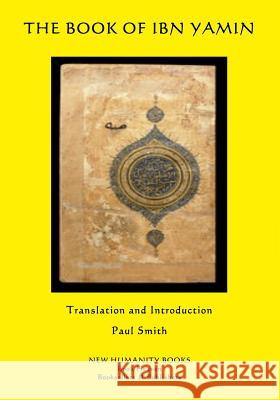
THE BOOK OF IBN YAMIN Translation & Introduction Paul Smith Amir Fakhr al-Din Mahmud, or Ibn Yamin (1286-1367), was born in Turkistan. His father was a poet who taught him the craft and left his son wealthy and the role of the court-poet in Khurasan. Ibn Yamin was taken captive when war broke out in 1342 and his complete Divan of poems was destroyed. He was a master of the form of the qit'a but he also wrote ruba'is and ghazals... often with a Sufi point of view. All are here represented. He is now as he was then, famous for his down-to-earth commonsense. Hafiz was influenced by his poems. He...
THE BOOK OF IBN YAMIN Translation & Introduction Paul Smith Amir Fakhr al-Din Mahmud, or Ibn Yamin (1286-1367), was born in Turkistan. His father was ...
THE BOOK OF MAHSATI GANJAVI Translation & Introduction Paul Smith We know little of Mahsati Ganjavi's life (1098-1185) except that she lived in Ganjeh when Sultan Sanjar reigned and as she was a poet at his court she would have known Anvari. She was a court, dervish and ribald poet. She knew Nizami (she is said to have been buried in his mausoleum) and Omar Khayyam... and like Omar composed only in the ruba'i form and must be considered not only a master of that form but also to have helped to revolutionize it. She was an influence on perhaps Iran's greatest female poet Jahan Khatun of Shiraz...
THE BOOK OF MAHSATI GANJAVI Translation & Introduction Paul Smith We know little of Mahsati Ganjavi's life (1098-1185) except that she lived in Ganjeh...
THE BOOK OF HUMA Poems of Meher Baba Translation & Introduction Paul Smith Merwan S. Irani (1894-1969), known world-wide as Meher Baba, took Huma (Phoenix) as his takhallus or pen-name when he composed enlightened ghazals in a mixture of Persian, Urdu, Hindi & Gujarati in his twenties as a realized disciple of the Qutub or Perfect Master Upasni Maharaj, and also later on. He knew the ghazals of Hafiz by heart as did his father the dervish Sheriar Irani, who had originally walked to Pune in India from Khooramshah in Iran. Merwan went on to reveal himself as Qutub and later also declared...
THE BOOK OF HUMA Poems of Meher Baba Translation & Introduction Paul Smith Merwan S. Irani (1894-1969), known world-wide as Meher Baba, took Huma (Pho...
THE BOOK OF LALLA DED (LALLESHWARI) Translation & Introduction Paul Smith Lalla Ded or Lalleshwari is the famous female poet/saint from Kashmir who lived at exactly the same time as Hafiz of Shiraz (1320-1392). Her vakhs (poems/sayings) are sung even today in Kashmir. She was married at a young age but the marriage was a failure and she walked out at the age of twenty-four. She became a disciple of Siddha Srikanth. It must have taken a lot of courage on her part to walk out of a marriage and to walk around unclothed as she did. She was treated with contempt by some and much reverence by...
THE BOOK OF LALLA DED (LALLESHWARI) Translation & Introduction Paul Smith Lalla Ded or Lalleshwari is the famous female poet/saint from Kashmir who li...
THE BOOK OF SUFI RIBALDRY Sana'i, Anvari, Mahsati, Rumi, Sadi & Obeyd Zakani Translation & Introduction Paul Smith Some of the greatest of the Persian Sufi poets composed ribald and at times 'obscene' poems and prose for satirical and often (as in the case of Rumi and Sadi) for teaching some spiritual truth or moral. Here is a wide-ranging selection of the greatest of them to the fourteenth century. Here are at times hilarious, witty, weird and erotic and often obscene poems and prose in most of the various forms of classical Persian poetry ... the ghazal, the ruba'i, the masnavi, the qit'a,...
THE BOOK OF SUFI RIBALDRY Sana'i, Anvari, Mahsati, Rumi, Sadi & Obeyd Zakani Translation & Introduction Paul Smith Some of the greatest of the Persian...
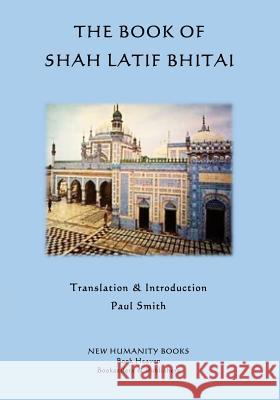
THE BOOK OF SHAH LATIF BHITAI Translation & Introduction Paul Smith Shah Abdul Latif (1689-1752) was a Sufi Master and is considered by many to be the greatest poet of the Sindhi language. His book of poetry is called the Risalo. His shrine is located in Bhit and attracts hundreds of pilgrims every day. He is the most famous Sindhi poet and Sufi. He was not just adored for poetry, people from far and near respected and loved him as a Spiritual Master. He composed dohas (self-contained strict-rhyming couplets popular with poet-saints of India like Kabir, Surdas, Tukaram) and freed it from the...
THE BOOK OF SHAH LATIF BHITAI Translation & Introduction Paul Smith Shah Abdul Latif (1689-1752) was a Sufi Master and is considered by many to be the...
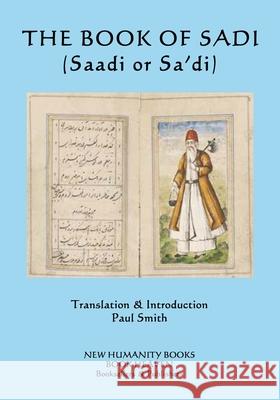
THE BOOK OF SADI (Saadi or Sa'di) Translation & Introduction Paul Smith Sadi (Saadi or Sa'di) of Shiraz (1210-1291), a contemporary of Rumi who influenced him, was another Perfect Master Poet who expressed himself in the ruba'i form as well as hundreds of ghazals in his beautiful Divan that often also contained images from dervish dancing. Sadi was a great traveller who spent forty years on the road throughout the Middle-East, North Africa and India and many of the incidents he experienced he wrote down in his two most famous works when he finally returned to his beloved birth-place... The...
THE BOOK OF SADI (Saadi or Sa'di) Translation & Introduction Paul Smith Sadi (Saadi or Sa'di) of Shiraz (1210-1291), a contemporary of Rumi who influe...