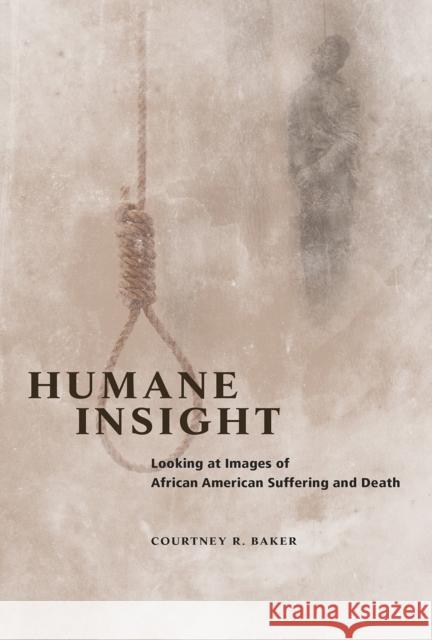
In the history of black America, the image of the mortal, wounded, and dead black body has long been looked at by others from a safe distance. Courtney Baker questions the relationship between the spectator and victim and urges viewers to move beyond the safety of the "gaze" to cultivate a capacity for humane insight toward representations of human suffering. Utilizing the visual studies concept termed the "look," Baker interrogates how the notion of humanity was articulated and recognized in oft-referenced moments within the African American experience: the graphic brutality of the 1834...
In the history of black America, the image of the mortal, wounded, and dead black body has long been looked at by others from a safe distance. Courtne...
In the history of black America, the image of the mortal, wounded, and dead black body has long been looked at by others from a safe distance. Courtney Baker questions the relationship between the spectator and victim and urges viewers to move beyond the safety of the "gaze" to cultivate a capacity for humane insight toward representations of human suffering. Utilizing the visual studies concept termed the "look," Baker interrogates how the notion of humanity was articulated and recognized in oft-referenced moments within the African American experience: the graphic brutality of the 1834...
In the history of black America, the image of the mortal, wounded, and dead black body has long been looked at by others from a safe distance. Courtne...