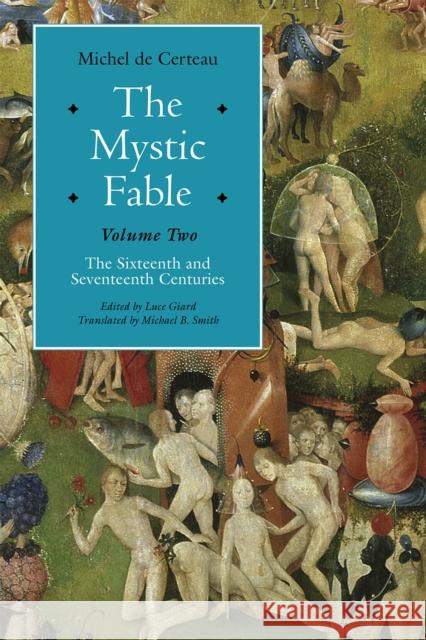
More than two decades have passed since Chicago published the first volume of this groundbreaking work in the Religion and Postmodernism series. It quickly became influential across a wide range of disciplines and helped to make the tools of poststructuralist thought available to religious studies and theology, especially in the areas of late medieval and early modern mysticism. Though the second volume remained in fragments at the time of his death, Michel de Certeau had the foresight to leave his literary executor detailed instructions for its completion, which formed the basis for the...
More than two decades have passed since Chicago published the first volume of this groundbreaking work in the Religion and Postmodernism series. It qu...
"A genuinely innovative contribution to philosophical accounts of subjectivity and temporality. Romano develops what he calls an 'evential hermeneutics' that takes as its starting point the life-changing events that upend our world. He studies the structure of these events in terms of the genuine change and novelty that they open up, distinguishing them from mere occurrences, which can be explained as a subject realizing pre-existing possibilities. Because such events introduce radically new possibilities by transforming me and my world, Romano argues that they must be understood as...
"A genuinely innovative contribution to philosophical accounts of subjectivity and temporality. Romano develops what he calls an 'evential hermeneutic...
"A genuinely innovative contribution to philosophical accounts of subjectivity and temporality. Romano develops what he calls an 'evential hermeneutics' that takes as its starting point the life-changing events that upend our world. He studies the structure of these events in terms of the genuine change and novelty that they open up, distinguishing them from mere occurrences, which can be explained as a subject realizing pre-existing possibilities. Because such events introduce radically new possibilities by transforming me and my world, Romano argues that they must be understood as...
"A genuinely innovative contribution to philosophical accounts of subjectivity and temporality. Romano develops what he calls an 'evential hermeneutic...