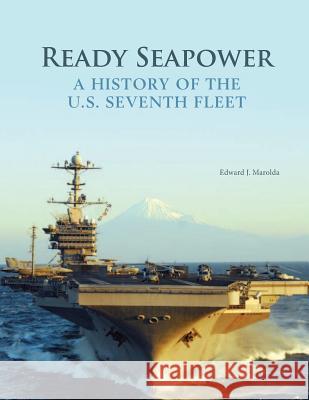
U.S. interest in the Far East dates from the earliest years of the republic, when American merchant ships sailed across the vast Pacific to ply their trade in the ports of China, the Philippines, Indochina, and the East Indies. Warships of the U.S. Navy followed soon afterward to protect those commercial carriers and to promote American diplomatic interests in Asia. The U.S. Seventh Fleet, successor to the Asiatic Squadron and Asiatic Fleet of the 19th and early 20th centuries, began making its own naval history in the early days of World War II. Unique among the nation's naval forces, the...
U.S. interest in the Far East dates from the earliest years of the republic, when American merchant ships sailed across the vast Pacific to ply their ...
U.S. interest in the Far East dates from the earliest years of the republic, when American merchant ships sailed across the vast Pacific to ply their trade in the ports of China, the Philippines, Indochina, and the East Indies. Warships of the U.S. Navy followed soon afterward to protect those commercial carriers and to promote American diplomatic interests in Asia. The U.S. Seventh Fleet, successor to the Asiatic Squadron and Asiatic Fleet of the 19th and early 20th centuries, began making its own naval history in the early days of World War II. Unique among the nation's naval forces, the...
U.S. interest in the Far East dates from the earliest years of the republic, when American merchant ships sailed across the vast Pacific to ply their ...
During much of the 19th and 20th centuries, the Washington Navy Yard was the most recognizable symbol of the United States Navy in the nation's capital. The shipyard built a number of the Navy's first warships and repaired, refitted, and provisioned most of the frigates, sloops, and other combatants of the fledgling naval service. The masts and rigging of USS Constitution were a common site on the banks of the Anacostia River. Booming cannon became a routine sound in southeast Washington during the mid-19th century as Commander John A. Dahlgren, "father of American naval ordnance," test-fired...
During much of the 19th and 20th centuries, the Washington Navy Yard was the most recognizable symbol of the United States Navy in the nation's capita...