This publication has been prepared by the Occupational Safety and Health Administration (OSHA) to help dry cleaning establishments reduce employee exposures to perchloroethylene (also known as perc, tetrachloroethylene, C2Cl4 or Cl2C=CCl2). The dry cleaning industry has improved the control of perchloroethylene in recent years, and modern dry cleaning equipment involves much lower exposures than older style equipment. However, there is still a need to reduce employee exposure to the chemical to reduce any possible health effects that could result from long-term exposure to the chemical. Many...
This publication has been prepared by the Occupational Safety and Health Administration (OSHA) to help dry cleaning establishments reduce employee exp...
U. S. Department of Labor Occupational Safety and Administration
Many workplaces contain spaces that are considered to be "confined" because their configurations hinder the activities of employees who must enter into, work in or exit from them. In many instances, employees who work in confined spaces also face increased risk of exposure to serious physical injury from hazards such as entrapment, engulfment and hazardous atmospheric conditions. Confinement itself may pose entrapment hazards and work in confined spaces may keep employees closer to hazards such as machinery components than they would be otherwise. For example, confinement, limited access and...
Many workplaces contain spaces that are considered to be "confined" because their configurations hinder the activities of employees who must enter int...
U. S. Department of Labor Occupational Safety and Administration
Methylene chloride, also called dichloromethane, is a volatile, colorless liquid with a chloroform-like odor. Methylene chloride is used in various industrial processes in many different industries: paint stripping, pharmaceutical manufacturing, paint remover manufacturing, metal cleaning and degreasing, adhesives manufacturing and use, polyurethane foam production, film base manufacturing, polycarbonate resin production, and solvent distribution and formulation. The predominant means of exposure to methylene chloride is inhalation and skin exposure. OSHA considers methylene chloride to be a...
Methylene chloride, also called dichloromethane, is a volatile, colorless liquid with a chloroform-like odor. Methylene chloride is used in various in...
U. S. Department of Labor Occupational Safety and Administration
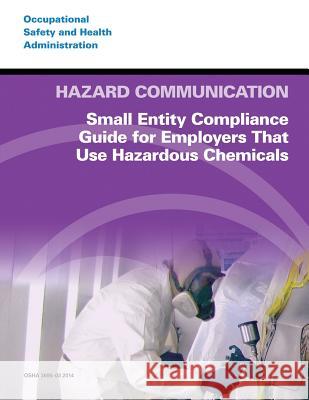
Chemicals have become an important element of almost every aspect of modern life. All of these chemicals-from cleaning fluids to pharmaceuticals, pesticides, and paints-are produced in workplaces, and may be used in workplaces downstream. While these chemicals have utility and benefits in their applications, they also have the potential to cause adverse effects. These adverse effects include both health hazards (such as carcinogenicity and sensitization), and physical hazards (for example, flammability and reactivity properties). In order to protect workers from these effects-and to reduce...
Chemicals have become an important element of almost every aspect of modern life. All of these chemicals-from cleaning fluids to pharmaceuticals, pest...
U. S. Department of Labor Occupational Safety and Administration
First aid is emergency care provided for injury or sudden illness before emergency medical treatment is available. The first-aid provider in the workplace is someone who is trained in the delivery of initial medical emergency procedures, using a limited amount of equipment to perform a primary assessment and intervention while awaiting arrival of emergency medical service (EMS) personnel. A workplace first-aid program is part of a comprehensive safety and health management system that includes the following four essential elements: 1) Management Leadership and Employee Involvement, 2)...
First aid is emergency care provided for injury or sudden illness before emergency medical treatment is available. The first-aid provider in the workp...
U. S. Department of Labor Occupational Safety and Administration
Anyone who works in the metal scrap recycling industry-employers, employees, safety professionals, and industrial hygienists-should read this publication. This guide can help you identify and manage the hazards associated with exposure to various metals and processing chemicals and with related processes and equipment used in metal scrap recycling operations. As an employer, this guide will help you protect your employees by helping you and your employees recognize, manage, and control the potential hazards associated with common metal scrap recycling processes. This guide will also assist...
Anyone who works in the metal scrap recycling industry-employers, employees, safety professionals, and industrial hygienists-should read this publicat...
U. S. Department of Labor Occupational Safety and Administration
Many standards promulgated by the Occupational Safety and Health Administration (OSHA) explicitly require the employer to train employees in the safety and health aspects of their jobs. Other OSHA standards make it the employer's responsibility to limit certain job assignments to employees who are "certified," "competent," or "qualified"-meaning that they have had special previous training, in or out of the workplace. The term "designated" personnel means selected or assigned by the employer or the employer's representative as being qualified to perform specific duties. These requirements...
Many standards promulgated by the Occupational Safety and Health Administration (OSHA) explicitly require the employer to train employees in the safet...
U. S. Department of Labor Occupational Safety and Administration National Highway Traffic Administration
Motor vehicle crashes are a leading cause of death and injury for all ages. Crashes on and off the job have far-reaching financial and psychological effects on employees, their coworkers and families, and their employers. You need a driver safety program: To save lives and to reduce the risk of life-altering injuries within your workforce; To protect your organization's human and financial Resources; To guard against potential company and personal liabilities associated with crashes involving employees driving on company business. Your program should work to keep the driver and those with...
Motor vehicle crashes are a leading cause of death and injury for all ages. Crashes on and off the job have far-reaching financial and psychological e...
U. S. Department of Labor Occupational Safety and Administration
Employers are responsible for providing a safe and healthy workplace for their employees. OSHA's role is to promote the safety and health of America's working men and women by setting and enforcing standards; providing training, outreach and education; establishing partnerships; and encouraging continual improvement in workplace safety and health. This handbook is provided to owners, proprietors and managers of small businesses by the Occupational Safety and Health Administration (OSHA), an agency of the U.S. Department of Labor. The handbook should help small business employers meet the...
Employers are responsible for providing a safe and healthy workplace for their employees. OSHA's role is to promote the safety and health of America's...
U. S. Department of Labor Occupational Safety and Administration
Noise, or unwanted sound, is one of the most pervasive occupational health problems. It is a by-product of many industrial processes. Sound consists of pressure changes in a medium (usually air), caused by vibration or turbulence. These pressure changes produce waves emanating away from the turbulent or vibrating source. Exposure to high levels of noise causes hearing loss and may cause other harmful health effects as well. The extent of damage depends primarily on the intensity of the noise and the duration of the exposure. Noise-induced hearing loss can be temporary or permanent. Temporary...
Noise, or unwanted sound, is one of the most pervasive occupational health problems. It is a by-product of many industrial processes. Sound consists o...