The contributors to Grace for Grace focus on the debates on grace and free will inspired by Augustine's later teachings on grace and the various reactions to it. In both popular and scholarly literature, the conflict has been traditionally referred to as the "Semi-Pelagian Controversy." For several decades, scholars have distanced themselves from that overly-simplistic and inaccurate portrayal. This book intends to solidify a disparate movement of scholarly thought and offer a secure basis for renewed study of the persons, texts, and events of this critical period in the reception of...
The contributors to Grace for Grace focus on the debates on grace and free will inspired by Augustine's later teachings on grace and the vari...
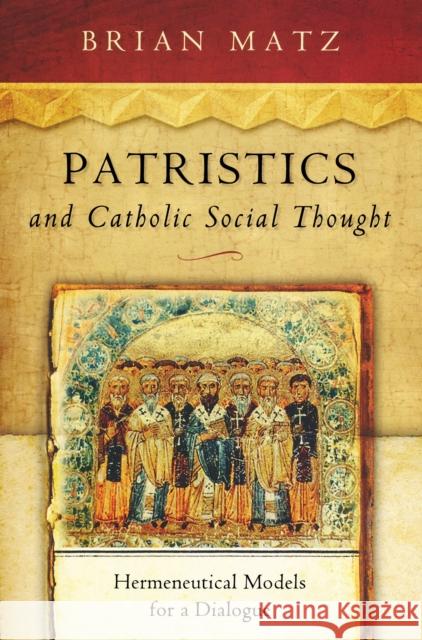
In "Patristics and Catholic Social Thought: Hermeneutical Models for a Dialogue," Brian Matz argues that scholars and proponents of the modern Catholic social tradition can gain from the use of ancient texts for contemporary socioethical formation. Although it is impossible to expect a one-to-one correspondence between the social ideas of early church theologians, such as Augustine, and those of modern Catholic social thought, this book offers four hermeneutical models that will facilitate a fruitful dialogue between the two worlds. The result is a challenge to modern Christian ethicists to...
In "Patristics and Catholic Social Thought: Hermeneutical Models for a Dialogue," Brian Matz argues that scholars and proponents of the modern Catholi...
Despite their rich tradition of social concern, Protestants have historically struggled to articulate why, whether, and how to challenge unethical social structures. This book introduces Protestants to the biblical and historical background of Christian social ethics, inviting them to understand the basis for social action and engage with the broader tradition. It embraces and explains long-standing Christian reflection on social ethics and shows how Scripture and Christian history connect to current social justice issues. Each chapter includes learning outcomes and chapter highlights.
Despite their rich tradition of social concern, Protestants have historically struggled to articulate why, whether, and how to challenge unethical soc...