Heart disease and stroke are the leading causes of death in the United States. Too much sodium can increase blood pressure as well as the risk of heart attack and stroke. The Dietary Guidelines for Americans recommends an intake of less than or equal to 2,300 mg of sodium per day for adults in general. The recommendation for individuals in the following population groups however, is less than 1,500 mg of sodium per day: Individuals 51 years of age or older; African Americans; Individuals with high blood pressure; Individuals with diabetes; and Individuals with chronic kidney disease....
Heart disease and stroke are the leading causes of death in the United States. Too much sodium can increase blood pressure as well as the risk of hear...
The National Health Survey Act, passed in 1956, provided the legislative authorization for a continuing survey to provide current statistical data on the amount, distribution, and effects of illness and disability in the United States. To fulfill the purposes of this act, it was recognized that a data collection effort needed to be implemented that would involve at least three sources: (1) the people themselves by direct interview; (2) clinical tests, measurements, and physical examinations on sample persons; and (3) places where persons received medical care such as hospitals, clinics, and...
The National Health Survey Act, passed in 1956, provided the legislative authorization for a continuing survey to provide current statistical data on ...
Lower extremity disease (LED) is a chronic, disabling disease that negatively influences the quality of life particularly in elderly and diabetic populations. The primary etiologic causes of LED are peripheral vascular disease (PVD) and peripheral neuropathy (PN) and in association with foot deformities may result in disabling complications such as ulcers, gangrene, and amputation. In the early stages of disease, a significant proportion of the population are asymptomatic but some of the identified risk factors include age, male sex, hypertension, hyperlipedemia, smoking, diabetes, and...
Lower extremity disease (LED) is a chronic, disabling disease that negatively influences the quality of life particularly in elderly and diabetic popu...
U. S. Department of Heal Huma Centers for Disease Cont An
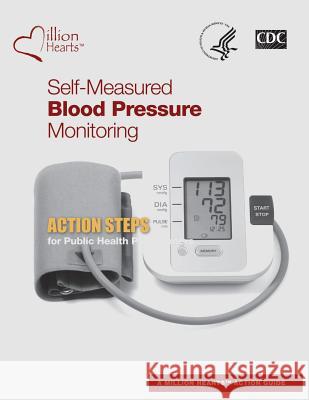
This publication provides action steps and resources for public health practitioners on self-measured blood pressure monitoring and is not meant to represent clinical recommendations or guidelines. It includes: A description of the burden of hypertension; A summary of the scientific evidence establishing the significance and effectiveness of SMBP plus additional support; A definition and explanation of additional support strategies for SMBP; Types and costs of home blood pressure monitors used for SMBP; Available cost data for SMBP plus additional support interventions; Health insurance...
This publication provides action steps and resources for public health practitioners on self-measured blood pressure monitoring and is not meant to re...
The MEC Interview component of the NHANES consists of the use of questionnaires to address a variety of health-related topics. The MEC questionnaires are designed to obtain information concerning particular health behaviors and conditions, risk factors, and mental health. The questionnaires are administered to examinees 8 years of age or older. The MEC interview is designed to be administered only with the sample person in the room. There are four sections of the NHANES MEC Interview. The first section consists of three cognitive functioning exercises for SPs 60 years and older. The second...
The MEC Interview component of the NHANES consists of the use of questionnaires to address a variety of health-related topics. The MEC questionnaires ...
Physicians function as mobile examination center (MEC) team members with the primary function of serving as the safety officer, as well as collecting blood pressure, heart rate, and pulse data. These measurements are the data source for reporting the national standard for blood pressure and heart rate from the NHANES. The American Heart Association blood pressure protocol is used, which results in standardized data collection across both MEC teams. The physician examination protocol, described in detail in Chapter 4, emphasizes the importance of following the protocol for the purpose of...
Physicians function as mobile examination center (MEC) team members with the primary function of serving as the safety officer, as well as collecting ...
The Centers for Disease Control and Prevention (CDC), Division of Tuberculosis (TB) Elimination, is responsible for the TB skin-testing component of NHANES. The objective is to determine the prevalence of TB infection in the U.S. population. All sample persons (SPs) aged 6 years or older are offered testing for infection with the bacterium that causes TB. TB is a disease caused by a germ called Mycobacterium tuberculosis that is spread from person to person through the air. TB usually affects the lungs, but it can also affect other parts of the body, such as the brain, the kidneys, or the...
The Centers for Disease Control and Prevention (CDC), Division of Tuberculosis (TB) Elimination, is responsible for the TB skin-testing component of N...
This manual provides information to assist the NHANES National Youth Fitness Survey (NYFS) staff in understanding the background, design, and daily operations of NHANES since many of the NYFS operations and procedures run in parallel or in conjunction with NHANES. The mobile center (MC) for the NYFS will be located adjacent to the four trailers that comprise the NHANES mobile exam center (MEC). The field office (FO) staff will provide the same support for NYFS as for NHANES. Supplies will be obtained from the NHANES warehouse and the NHANES facilities and equipment specialist (FES) will...
This manual provides information to assist the NHANES National Youth Fitness Survey (NYFS) staff in understanding the background, design, and daily op...
The purpose of the VOC/Perchlorate study is to determine the prevalence of exposures to chemicals called Volatile Organic Compounds (VOCs) and Perchlorates. Volatile organic compounds are emitted as gases from certain solids or liquids. VOCs include a variety of chemicals, some of which may have short- and long-term adverse health effects. Concentrations of many VOCs are consistently higher indoors (up to ten times higher) than outdoors. VOCs are emitted by a wide array of products numbering in the thousands. Examples include paints and lacquers, paint strippers, cleaning supplies,...
The purpose of the VOC/Perchlorate study is to determine the prevalence of exposures to chemicals called Volatile Organic Compounds (VOCs) and Perchlo...
The vast majority of people with smell and taste disorders have problems with smell, not taste. Smell plays the most important role in appreciating flavors in eating. Common "tastes" such as chocolate, coffee, strawberry, apple, peach, pizza, steak sauce, and chicken actually reflect smell-mediated sensations: odors from chewing food are released and propelled upwards towards the olfactory receptors via the posterior nasal pharynx. Taste buds, located mainly on the tongue surface, palate, and oropharynx, are primarily responsible for mediating sweet, sour, bitter, salty, and metallic...
The vast majority of people with smell and taste disorders have problems with smell, not taste. Smell plays the most important role in appreciating fl...