Department of Health and Huma Centers for Disease Cont An National Institute Fo Safet
Respirable silica dust exposure has long been known to be a serious health threat to workers in many industries. Overexposure to respirable silica dust can lead to the development of silicosis- a lung disease that can be disabling and fatal in its most severe form. Once contracted, there is no cure for silicosis so the goal must be to prevent development by limiting a worker's exposure to respirable silica dust. In addition, the International Agency for Research on Cancer (IARC) has concluded that there is sufficient evidence to classify silica as a human carcinogen. For workers in the...
Respirable silica dust exposure has long been known to be a serious health threat to workers in many industries. Overexposure to respirable silica dus...
Department of Health and Huma Centers for Disease Cont An National Institute Fo Safet
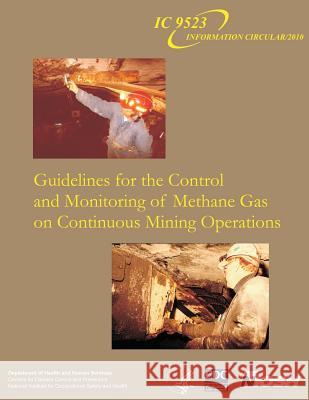
Until the early 1980s, mine face ventilation systems were designed for ventilating cutting depths up to 20 feet. Since that time, use of remotely operated mining machines have allowed cutting depths to increase to 40 ft, increasing concerns about the effects on methane levels at the mine face area. The principles for efficient methane control during deeper cutting remained the same, namely Move a sufficient quantity of intake air from the end of the tubing or curtain to the face. Mix intake air with methane gas liberated at the face. Move methane contaminated air away from the face. However,...
Until the early 1980s, mine face ventilation systems were designed for ventilating cutting depths up to 20 feet. Since that time, use of remotely oper...
Department of Health and Huma Centers for Disease Cont An National Institute Fo Safet
In 2009, the operating height of approximately one fourth of underground coal mines in the U.S. restricted mine workers to kneeling, crawling, and/or stooping posture to perform work MSHA 2009]. The large number of knee injuries to these workers is likely attributed to exposure to musculoskeletal disorder risk factors (prolonged kneeling, crawling, and twisting on one's knees). Therefore, the National Institute for Occupational Safety and Health has investigated three different biomechanical parameters (muscle activity of the knee flexors and extensors, pressure at the knee, and the net...
In 2009, the operating height of approximately one fourth of underground coal mines in the U.S. restricted mine workers to kneeling, crawling, and/or ...