U. S. Department of Heal Huma Agency for Healthcare Resea An
Cardiovascular disease (CVD) includes conditions such as coronary heart disease, stroke, heart failure, arrhythmia, heart valve disease, congenital heart disease, and hypertension. The American Heart Association has estimated that CVD affects 83.6 million individuals in the U.S., contributes to 32.3% of deaths, and is a leading cause of disability. Atherosclerosis causes coronary heart disease (CHD), cerebrovascular disease, and peripheral artery disease. Abnormal lipoprotein metabolism predisposes individuals to atherosclerosis. Due to the consistent and robust association of higher LDL-c...
Cardiovascular disease (CVD) includes conditions such as coronary heart disease, stroke, heart failure, arrhythmia, heart valve disease, congenital he...
U. S. Department of Heal Huma Agency for Healthcare Resea An
Drug use in youth is associated with multiple negative health and social consequences. Even infrequent use increases one's risk of serious adverse events due to an increase in risk-taking behaviors while intoxicated or impaired. Primary care could play a role in helping to prevent and reduce drug use in children and adolescents. In 2008, the U.S. Preventive Services Task Force (USPSTF) concluded that there was insufficient evidence to recommend for or against screening adolescents, adults, and pregnant women for illicit drug use. This recommendation was based on a staged evidence review of...
Drug use in youth is associated with multiple negative health and social consequences. Even infrequent use increases one's risk of serious adverse eve...
U. S. Department of Heal Huma Agency for Healthcare Resea An
The U.S. Preventive Services Task Force (USPSTF) will use this evidence review to update its previous recommendation on peripheral artery disease (PAD) screening. In 2005, the USPSTF recommended against routing screening for PAD based on fair-quality evidence indicating that routine screening for PAD in asymptomatic adults had little benefit. This systematic evidence review was conducted on the diagnostic and prognostic value of the resting ankle-brachial index (ABI) in unselected populations. This review also examined the benefit and harms of treating generally asymptomatic persons with...
The U.S. Preventive Services Task Force (USPSTF) will use this evidence review to update its previous recommendation on peripheral artery disease (PAD...
U. S. Department of Heal Huma Centers for Disease Cont An
The Fourth National Report on Human Exposure to Environmental Chemicals, Updated Tables, September 2013 provides nationally representative biomonitoring data that has become available since the publication of the Fourth National Report on Human Exposure to Environmental Chemicals, 2009. The Updated Tables, September 2013 includes all the updates previously provided in Updated Tables, July 2010 through Updated Tables, March 2013. The Updated Tables, September 2013 present data for 91 chemicals measured in serum pooled samples that have not been reported in any previous Updated Tables. Since...
The Fourth National Report on Human Exposure to Environmental Chemicals, Updated Tables, September 2013 provides nationally representative biomonitori...
U. S. Department of Heal Huma Centers for Disease Cont An
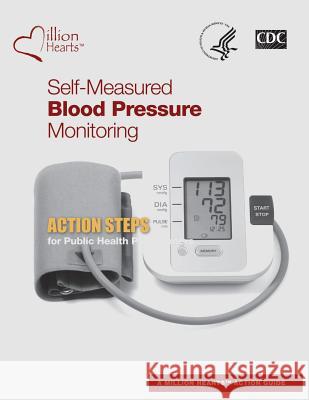
This publication provides action steps and resources for public health practitioners on self-measured blood pressure monitoring and is not meant to represent clinical recommendations or guidelines. It includes: A description of the burden of hypertension; A summary of the scientific evidence establishing the significance and effectiveness of SMBP plus additional support; A definition and explanation of additional support strategies for SMBP; Types and costs of home blood pressure monitors used for SMBP; Available cost data for SMBP plus additional support interventions; Health insurance...
This publication provides action steps and resources for public health practitioners on self-measured blood pressure monitoring and is not meant to re...
U. S. Department of Heal Huma Agency for Healthcare Resea An
This historic report, the first annual report on healthcare disparities, is intended to provide a balanced summary of the state of disparities in the United States. It will demonstrate that disparities exist for many Americans and improvement is possible. Rather than offer a series of snapshots of disparities from individual research studies, this report provides a comprehensive view of the scope and characteristics of differences in health care quality and access associated with patient race, ethnicity, income, education, and place of residence. To date, no report has provided extensive...
This historic report, the first annual report on healthcare disparities, is intended to provide a balanced summary of the state of disparities in the ...
U. S. Department of Heal Huma Agency for Healthcare Resea An
The United States health care delivery system is among the world's finest with outstanding providers, facilities, and technology. Many Americans enjoy easy access to care. However, not all Americans have full access to high quality health care. Released in 2003, the first National Healthcare Disparities Report (NHDR) is a comprehensive national overview of disparities in health care among racial, ethnic, and socioeconomic groups in the general U. S. population and among priority populations. This second NHDR is built upon the 2003 report and continues to include a comprehensive national...
The United States health care delivery system is among the world's finest with outstanding providers, facilities, and technology. Many Americans enjoy...
U. S. Department of Heal Huma Agency for Healthcare Resea An
Twenty years ago, the Department of Health and Human Services (HHS) released the Report of the Secretary's Task Force on Black and Minority Health. That report documented many disparities in health and led to interventions to improve the health and health care of minorities. This year, the Agency for Healthcare Research and Quality (AHRQ) is pleased to release the third National Healthcare Disparities Report (NHDR). This annual report provides a comprehensive national overview of disparities in health care among racial, ethnic, and socioeconomic groups in the general U.S. population and...
Twenty years ago, the Department of Health and Human Services (HHS) released the Report of the Secretary's Task Force on Black and Minority Health. Th...
U. S. Department of Heal Huma Agency for Healthcare Resea An
The Agency for Healthcare Research and Quality (AHRQ) is pleased to release the 2006 National Healthcare Disparities Report (NHDR) on behalf of the U.S. Department of Health and Human Services (HHS) and in collaboration with an HHS-wide Interagency Work Group. Like previous reports, the 2006 NHDR also received significant guidance from AHRQ leadership and AHRQ's National Advisory Committee. This fourth annual report to Congress provides a comprehensive national overview of disparities in health care among racial, ethnic, and socioeconomic groups in the general U.S. population and within...
The Agency for Healthcare Research and Quality (AHRQ) is pleased to release the 2006 National Healthcare Disparities Report (NHDR) on behalf of the U....
U. S. Department of Heal Huma Agency for Healthcare Resea An
This 2007 report is the fifth National Healthcare Disparities Report (NHDR). It is produced by the Agency for Healthcare Research and Quality (AHRQ) on behalf of the U.S. Department of Health and Human Services (HHS) and in collaboration with an HHS-wide Interagency Work Group. The NHDR provides a comprehensive national overview of disparities in health care among racial, ethnic, and socioeconomic groups in the general U.S. population and within specific priority populations, and it tracks the progress of activities to reduce disparities. The NHDR tracks disparities related to the quality of...
This 2007 report is the fifth National Healthcare Disparities Report (NHDR). It is produced by the Agency for Healthcare Research and Quality (AHRQ) o...