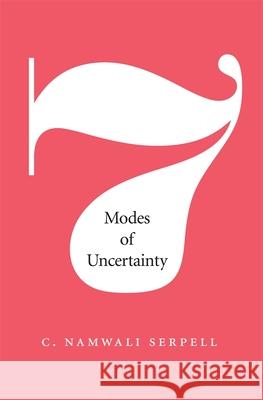
Literature is rife with uncertainty. Literature is good for us. These two ideas about reading literature are often taken for granted. But what is the relationship between literature's capacity to unsettle, perplex, and bewilder us, and literature's ethical value? To revive this question, C. Namwali Serpell proposes a return to William Empson's groundbreaking work, Seven Types of Ambiguity (1930), which contends that literary uncertainty is crucial to ethics because it pushes us beyond the limits of our own experience.
Taking as case studies experimental novels by Thomas...
Literature is rife with uncertainty. Literature is good for us. These two ideas about reading literature are often taken for granted. But what is t...