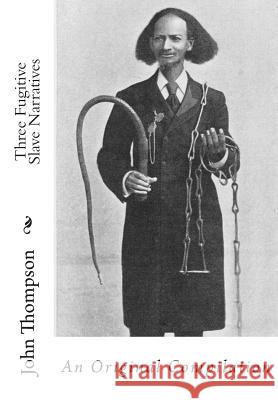
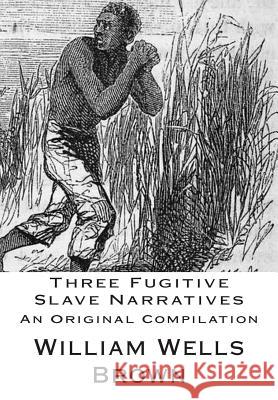
This original compilation of slave narratives contains three complete narrative written by William Wells Brown, John Thompson, and Henry Watson. All three of the aforementioned authors were fugitive slaves. 1.) Three Fugitive Slaves. Narrative of William W. Brown, a Fugitive Slave. Written by Himself. By William Wells Brown. (c)1847. 2.) The Life of John Thompson, a Fugitive Slave; Containing His History of 25 Years in Bondage, and His Providential Escape. Written by Himself By John Thompson. (c)1856 3.) Narrative of Henry Watson, A Fugitive Slave: Written By Himself By Henry Watson.(c)184
This original compilation of slave narratives contains three complete narrative written by William Wells Brown, John Thompson, and Henry Watson. All t...
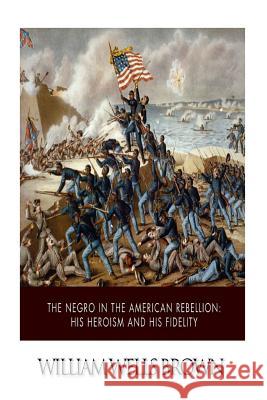
This documents the participation of both free blacks and slaves during the Civil War, as well as a background of African American participation in the Revolution and War of 1812. From the preface: "Feeling anxious to preserve for future reference an account of the part which the Negro took in suppressing the Slaveholders' Rebellion, I have been induced to write this work. In doing so, it occurred to me that a sketch of the condition of the race previous to the commencement of the war would not be uninteresting to the reader. For the information concerning the services which the blacks...
This documents the participation of both free blacks and slaves during the Civil War, as well as a background of African American participation in the...
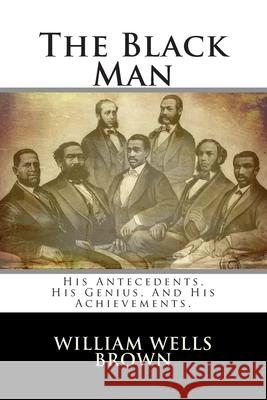
Published in 1863, this is a collection of sketches of various notable black people and the extraordinary things that they had done to prove that blacks were not inferior to whites.
Published in 1863, this is a collection of sketches of various notable black people and the extraordinary things that they had done to prove that blac...
"Clotelle - A Tale of the Southern States" from William Wells Brown. A prominent African-American abolitionist lecturer, novelist, playwright, and historian (1814-1884).
"Clotelle - A Tale of the Southern States" from William Wells Brown. A prominent African-American abolitionist lecturer, novelist, playwright, and his...
"Clotelle - The President's Daughter" from William Wells Brown. A prominent African-American abolitionist lecturer, novelist, playwright, and historian (1814-1884).
"Clotelle - The President's Daughter" from William Wells Brown. A prominent African-American abolitionist lecturer, novelist, playwright, and historia...
"The Narrative of William Wells Brown - A Fugitive Slave" from William Wells Brown. A prominent African-American abolitionist lecturer, novelist, playwright, and historian (1814-1884).
"The Narrative of William Wells Brown - A Fugitive Slave" from William Wells Brown. A prominent African-American abolitionist lecturer, novelist, play...
"Three Years in Europe" from William Wells Brown. A prominent African-American abolitionist lecturer, novelist, playwright, and historian (1814-1884).
"Three Years in Europe" from William Wells Brown. A prominent African-American abolitionist lecturer, novelist, playwright, and historian (1814-1884)....
Thirteen years ago, I came to your door, a weary fugitive from chains and stripes. I was a stranger, and you took me in. I was hungry, and you fed me. Naked was I, and you clothed me. Even a name by which to be known among men, slavery had denied me. You bestowed upon me your own. Base indeed should I be, if I ever forget what I owe to you, or do anything to disgrace that honored name
Thirteen years ago, I came to your door, a weary fugitive from chains and stripes. I was a stranger, and you took me in. I was hungry, and you fed me....
MORE than two hundred years have elapsed since the first cargo of slaves was landed on the banks of the James River, in the colony of Virginia, from the West coast of Africa. From the introduction of slaves in 1620, down to the period of the separation of the Colonies from the British Crown, the number had increased to five hundred thousand; now there are nearly four million. In fifteen of the thirty-one States, Slavery is made lawful by the Constitution, which binds the several States into one confederacy.
MORE than two hundred years have elapsed since the first cargo of slaves was landed on the banks of the James River, in the colony of Virginia, from t...