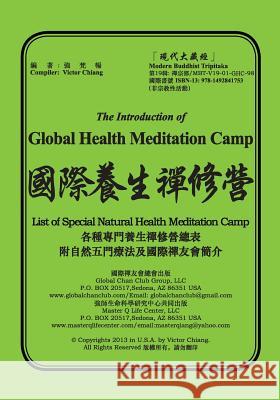
The list of proposed programs for Global Health Meditation Camp to be held in future . Also, the membership information of Global Chan Club and investment proposal for Global Chan Lodge are disclosed in the book .
The list of proposed programs for Global Health Meditation Camp to be held in future . Also, the membership information of Global Chan Club and invest...
Shykamuni once said "Chan shall be independent from scriptures, and focus on personal communication of its tenets between master and students." This book contains biography, teachings and Master Q's comments of the 28 Patriarch master from India. From the first Patriarch Kashyapa to the 28th Buddhidarma. Master Q commented and explained the contents while including definitions of the terminologies.
Shykamuni once said "Chan shall be independent from scriptures, and focus on personal communication of its tenets between master and students." This b...
When Buddhidarma came to China in 520 A.D, and he brought the Chan method with him. Lots of Chinese Chan Masters emerged afterwards and became the foundations of Chinese Chan Sec. Chan methods originated from India and flourished in China. In Song Dynasty, monk Puji compiled the teaching and enlightenments of all the Chinese Chan Masters so far into "A Collection of Five Biographies and Teachings of Chinese Chan Masters until Song Dynasty." In 1693 A.D, Master Chaoyong completed the collection of Chinese Chan Masters' Biographies and Teachings until Qing Dynasty by recompiling Puji's work and...
When Buddhidarma came to China in 520 A.D, and he brought the Chan method with him. Lots of Chinese Chan Masters emerged afterwards and became the fou...
This book compiles the sources of Chinese Buddhism, notably the Pure Land School, TianTai School, Consciousness Only School, Chan School and Maha Prajna Paramita Sutra. The purpose of this book is to use methodologies of the above schools in order to achieve Enlightenment and create new wisdom for the practitioners. This book especially emphasizes the Chan meditation practice from LinJi School of Chan.
This book compiles the sources of Chinese Buddhism, notably the Pure Land School, TianTai School, Consciousness Only School, Chan School and Maha Praj...
Master Q developed a series of new meditation systems using the debate method to push a participants' thoughts into a concentrated mindset. Master Q's Scientific meditation systems mark a major difference in guiding the thoughts to a specific topic and replace the role of traditional Chinese Buddhism Huatou method. In this book, Master Q guides the participants to use three major philosophical theories (regarding Otology, Phenomena, and Knowledge) as the bases of debate method. Further, participators can use the Seven W to challenge and question the problems within the three theories and...
Master Q developed a series of new meditation systems using the debate method to push a participants' thoughts into a concentrated mindset. Master Q's...
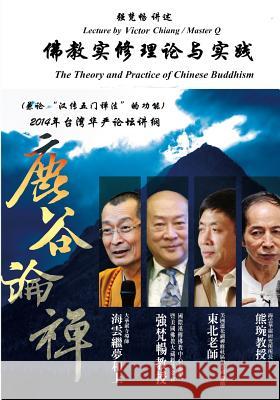
This book contains the lecture of Master Q presented to the Hua Yen Forum held by Hua Yen Institute and Hua Yen Temple in Taiwan at December 21st to 22nd 2014. This forum called the Debates on Chan Meditation at LuGuo which focused on the actual Chan meditation. This book includes the whole lecture as well as the PowerPoint of Master Q for the Debates. Master Q explained the methods and theories behind different Chinese Buddhist Sec. In addition, Master Q introduced his New Chinese Five Methods of Meditation. The comments of the other debaters are also recorded in the book.
This book contains the lecture of Master Q presented to the Hua Yen Forum held by Hua Yen Institute and Hua Yen Temple in Taiwan at December 21st to 2...
Shykamuni once said "Chan shall be independent from scriptures, and focus on personal communication of its tenets between master and students." When Bodhi dharma came to China from India, he introduced this method of enlightenments in A.D 520. Chinese Chan masters has further developed these methods and created 5 different Sec. These masters used their own ways to help their disciples. However, Yuan dynasty marked a downhill slide for Chan Sec since and some real Chan methods were lost, notably Linji Huatou Chan. Master Q brings a revolution on the public misperceptions of Chan. His three...
Shykamuni once said "Chan shall be independent from scriptures, and focus on personal communication of its tenets between master and students." When B...
Master Q has learnt Chinese Traditional LinJi Huatou Chan Meditation since 1991. He personally experienced the breakthrough around the end of 1995 from Master ShaoFan Wang, one of the close students of Master HuaiJing Nan. Since Master Q's breakthrough in 1995, he devoted all his time and energy into the study of Buddhist Sutra and Sarstra especially focused on meditation practice for 18 years. In 2012, Master Wang and Master Nan passed away in June and September. Thus, Master Q began to host and teach meditation Camps. From 2012 to 2014, Master Q hosted fifteen different meditation camps, in...
Master Q has learnt Chinese Traditional LinJi Huatou Chan Meditation since 1991. He personally experienced the breakthrough around the end of 1995 fro...
Chan Meditation is a method to train your mind and body. Employing Chan Meditation, participants can control their emotion, achieve Intellectual development and concentrate their mind no a certain point. Participants can even experience a "reborn" and change the conditions of their mind and body. According to Chinese Chan meditation tradition, there are two kinds of meditation methods. One is holding the mind downwards to achieve the peaceful mindfulness. The other method is the reverse which requires holding HuaTou upward, breakthrough HuaTou and achieve enlightenment. In our meditation...
Chan Meditation is a method to train your mind and body. Employing Chan Meditation, participants can control their emotion, achieve Intellectual devel...
LinJi Masters classified three categories of HuaTou for practitioners to study during Chan Meditation. First one is to deal with the stubbornness towards "self," notably "arrogance," "pride" and "selfishness." Second one is to handle the attachments toward all wondering "phenomena." Third one is to deal with the attachments of "knowledge," namely "Known barrier." Furthermore, Master Q has modified different HuaTou according to these principles to suit each practitioner. For example Pure Land believers can use "Who is chatting the Buddha?" For other practitioners, they can use their biggest...
LinJi Masters classified three categories of HuaTou for practitioners to study during Chan Meditation. First one is to deal with the stubbornness towa...