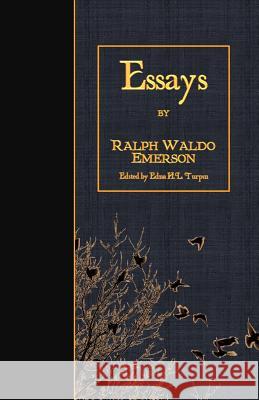
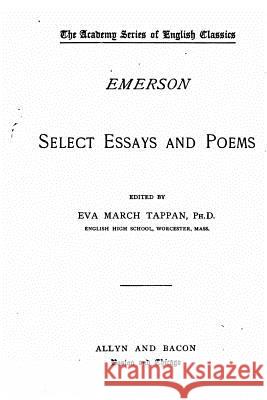
This work has been selected by scholars as being culturally important, and is part of the knowledge base of civilization as we know it. This work was reproduced from the original artifact, and remains as true to the original work as possible. Therefore, you will see the original copyright references, library stamps (as most of these works have been housed in our most important libraries around the world), and other notations in the work.This work is in the public domain in the United States of America, and possibly other nations. Within the United States, you may freely copy and distribute...
This work has been selected by scholars as being culturally important, and is part of the knowledge base of civilization as we know it. This work was ...
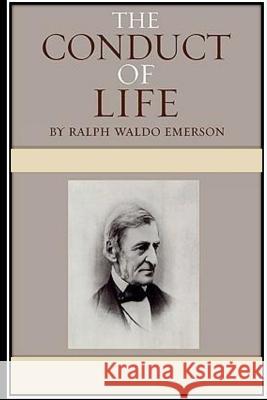
The Conduct of Life is a collection of essays by Ralph Waldo Emerson published in 1860 and revised in 1876. In this volume, Emerson sets out to answer "the question of the times: " "How shall I live?" It is composed of nine essays, each preceded by a poem. These nine essays are largely based on lectures Emerson held throughout the country, including for a young, mercantile audience in the lyceums of the Midwestern boomtowns of the 1850s. The Conduct of Life has been named as both one of Emerson's best works and one of his worst. It was one of Emerson's most successful publications and has...
The Conduct of Life is a collection of essays by Ralph Waldo Emerson published in 1860 and revised in 1876. In this volume, Emerson sets out to answer...
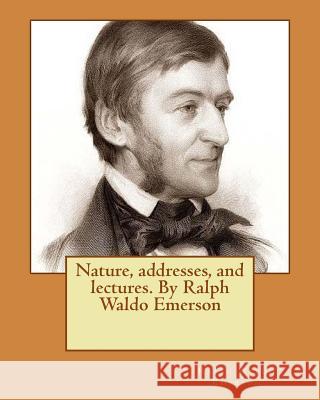
Ralph Waldo Emerson (May 25, 1803 - April 27, 1882), known professionally as Waldo Emerson, was an American essayist, lecturer, and poet who led the Transcendentalist movement of the mid-19th century. He was seen as a champion of individualism and a prescient critic of the countervailing pressures of society, and he disseminated his thoughts through dozens of published essays and more than 1,500 public lectures across the United States. Emerson gradually moved away from the religious and social beliefs of his contemporaries, formulating and expressing the philosophy of Transcendentalism in...
Ralph Waldo Emerson (May 25, 1803 - April 27, 1882), known professionally as Waldo Emerson, was an American essayist, lecturer, and poet who led the T...
Representative Men is a collection of seven lectures by Ralph Waldo Emerson, published as a book of essays in 1850. The first essay discusses the role played by "great men" in society, and the remaining six each extoll the virtues of one of six men deemed by Emerson to be great: Plato ("the Philosopher") Emanuel Swedenborg ("the Mystic") Michel de Montaigne ("the Skeptic") William Shakespeare ("the Poet") Napoleon ("the Man of the World") Johann Wolfgang von Goethe ("the Writer")
Representative Men is a collection of seven lectures by Ralph Waldo Emerson, published as a book of essays in 1850. The first essay discusses the role...
Ralph Waldo Emerson (May 25, 1803 - April 27, 1882), known professionally as Waldo Emerson, was an American essayist, lecturer, and poet who led the Transcendentalist movement of the mid-19th century. He was seen as a champion of individualism and a prescient critic of the countervailing pressures of society, and he disseminated his thoughts through dozens of published essays and more than 1,500 public lectures across the United States. Emerson gradually moved away from the religious and social beliefs of his contemporaries, formulating and expressing the philosophy of Transcendentalism in...
Ralph Waldo Emerson (May 25, 1803 - April 27, 1882), known professionally as Waldo Emerson, was an American essayist, lecturer, and poet who led the T...
The Conduct of Life is a collection of essays by Ralph Waldo Emerson published in 1860 and revised in 1876. In this volume, Emerson sets out to answer "the question of the times: " "How shall I live?"It is composed of nine essays, each preceded by a poem. These nine essays are largely based on lectures Emerson held throughout the country, including for a young, mercantile audience in the lyceums of the Midwestern boomtowns of the 1850s. The Conduct of Life has been named as both one of Emerson's best works and one of his worst. It was one of Emerson's most successful publications and has been...
The Conduct of Life is a collection of essays by Ralph Waldo Emerson published in 1860 and revised in 1876. In this volume, Emerson sets out to answer...