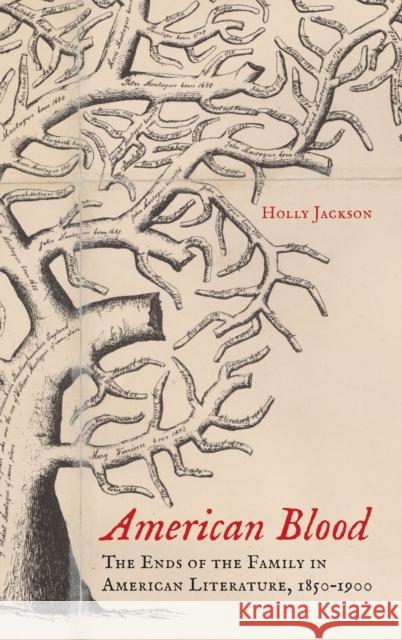
Conventional understandings of the family in nineteenth-century literary studies depict a venerated institution rooted in sentiment, sympathy, and intimacy. American Blood upends this notion, showing how novels of the period frequently emphasize the darker sides of the vaunted domestic unit. Rather than a source of security and warmth, the family emerges as exclusionary, deleterious to civic life, and antagonistic to the political enterprise of the United States. Through inventive readings supported by cultural-historical research, Holly Jackson explores critical depictions of the family...
Conventional understandings of the family in nineteenth-century literary studies depict a venerated institution rooted in sentiment, sympathy, and int...