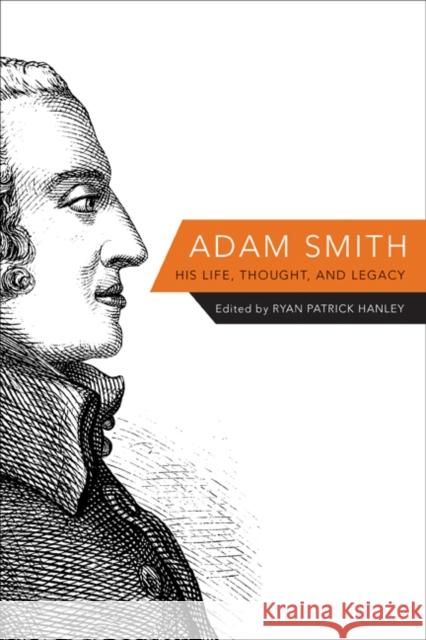
Adam Smith (1723-90) is perhaps best known as one of the first champions of the free market and is widely regarded as the founding father of capitalism. From his ideas about the promise and pitfalls of globalization to his steadfast belief in the preservation of human dignity, his work is as relevant today as it was in the eighteenth century. Here, Ryan Hanley brings together some of the world's finest scholars from across a variety of disciplines to offer new perspectives on Smith's life, thought, and enduring legacy.
Contributors provide succinct and accessible discussions of...
Adam Smith (1723-90) is perhaps best known as one of the first champions of the free market and is widely regarded as the founding father of capita...
Transatlantic slavery, just like the abolition movements, affected every space and community in Britain, from Cornwall to the Clyde, from dockyard alehouses to country estates. Today, its financial, architectural and societal legacies remain, scattered across the country in museums and memorials, philanthropic institutions and civic buildings, empty spaces and unmarked graves. Just as they did in the eighteenth and nineteenth centuries, British people continue to make sense of this 'national sin' by looking close to home, drawing on local histories and myths to negotiate their relationship to...
Transatlantic slavery, just like the abolition movements, affected every space and community in Britain, from Cornwall to the Clyde, from dockyard ale...
By extending our view of early black British writing beyond traditional questions of slavery and abolition, Ryan Hanley places black agency at the heart of a new social and cultural history of Georgian Britain. Combining historical research and literary analysis, he shows how black writers helped to make British society.
By extending our view of early black British writing beyond traditional questions of slavery and abolition, Ryan Hanley places black agency at the hea...