Interactions between societies are among the most powerful forces in human history. However, because they are difficult to reconstruct from archaeological data, they have often been overlooked and understudied by archaeologists. This is particularly true for hunter-gatherer societies, which are frequently seen as adapting to local conditions rather than developing in the context of large-scale networks. When Worlds Collide presents a new model for discerning interaction networks based on the archaeological record, and then applies the model to long-term change in an Arctic society....
Interactions between societies are among the most powerful forces in human history. However, because they are difficult to reconstruct from archaeolog...
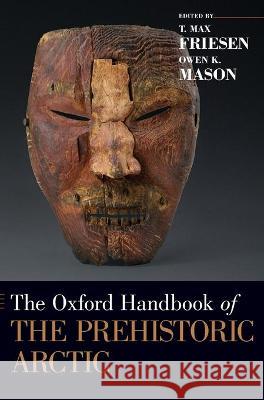
The North American Arctic was one of the last regions on Earth to be settled by humans, due to its extreme climate, limited range of resources, and remoteness from populated areas. Despite these factors, it holds a complex and lengthy history relating to Inuit, Inupiat, Inuvialuit, Yup'ik and Aleut peoples and their ancestors. The artifacts, dwellings, and food remains of these ancient peoples are remarkably well-preserved due to cold temperatures and permafrost, allowing archaeologists to reconstruct their lifeways with great accuracy. Furthermore, the combination of modern Elders'...
The North American Arctic was one of the last regions on Earth to be settled by humans, due to its extreme climate, limited range of resources, and re...