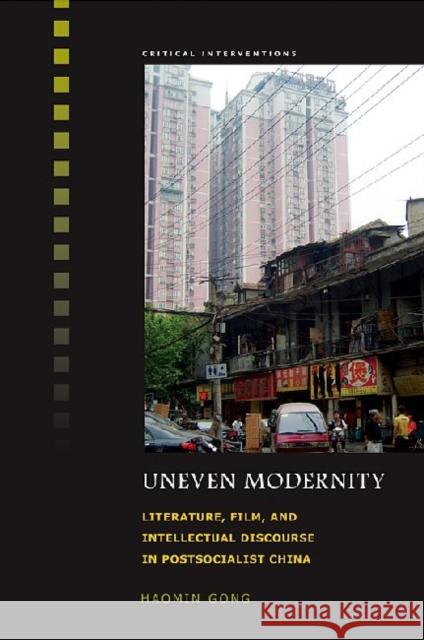
Postsocialist China is marked by paradoxes: economic boom, political conservatism, cultural complexity. Haomin Gong's dynamic study of these paradoxes, or "unevenness," provides a unique and seminal approach to contemporary China. Reading unevenness as a problem and an opportunity simultaneously, Gong investigates how this dialectical social situation shapes cultural production. He begins his investigation of "uneven modernity" in China by constructing a critical framework of unevenness among different theoretical schools and expounding on how dialectical thinking points to a metaphysical...
Postsocialist China is marked by paradoxes: economic boom, political conservatism, cultural complexity. Haomin Gong's dynamic study of these parado...
New information technologies have, to an unprecedented degree, come to reshape human relations, identities and communities both online and offline. As Internet narratives including online fiction, poetry and films reflect and represent ambivalent politics in China, the Chinese state wishes to enable the formidable soft power of this new medium whilst at the same time handling the ideological uncertainties it inevitably entails.
This book investigates the ways in which class, gender, ethnicity and ethics are reconfigured, complicated and enriched by the closely intertwined online and...
New information technologies have, to an unprecedented degree, come to reshape human relations, identities and communities both online and offline....