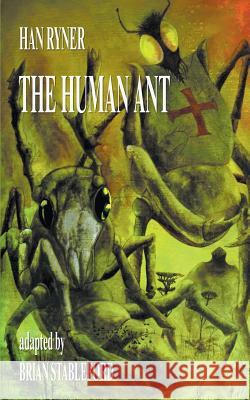
The Revolt of the Machines, translated and annotated by renowned science fiction writer and scholar Brian Stableford, features eight stories written between 1865 and 1918, providing a cross-section of the early development of what the editor of the 19th century magazine La Science Ilustree, Louis Figuier, called roman scientifique scientific fiction]. Expanding upon the scientific speculations of the day, the stories in this volume often adopt philosophical or moral tones when conceptualizing the consequences of the discovery of anti-gravity; the breakthrough finding that life is possible...
The Revolt of the Machines, translated and annotated by renowned science fiction writer and scholar Brian Stableford, features eight stories written b...
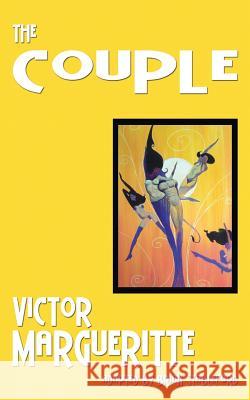
The Couple (1924) is the concluding volume in Victor Margueritte's trilogy, following The Bacheloress (1922) and The Companion (1923). It features both of the couples formed in the course of the earlier novels-Monique Lerbier and George Blanchet, and Annik Raimbert and Amedee Jacquemin, respectfully-but focuses primarily on their children and the broad social implications of an international socialist revolution attempting to overturn the depredations of capitalism. In The Couple, which is set in the near-future, Margueritte skillfully orchestrates a tangle of frustrated relationships in a...
The Couple (1924) is the concluding volume in Victor Margueritte's trilogy, following The Bacheloress (1922) and The Companion (1923). It features bot...
This elaborate French utopia, written by Monsieur de Listonai (pseudonym of Daniel Jost Villeneuve) and published in 1761, describes the journey of an inhabitant of the Earth to the hidden face of the Moon which is reached via a flying space galley, complete with pilot, navigator and crew. There, he meets the Selenite Arzame who takes him to the fortified city of Selenopolis, a perfect square built according to symmetry and universal philosophical principles, whose citizens always behave with intelligent discernment and view the universe in ways that are radically different than those...
This elaborate French utopia, written by Monsieur de Listonai (pseudonym of Daniel Jost Villeneuve) and published in 1761, describes the journey of an...
Delphine de Girardin (1804-1855) was the daughter of famous writer and playwright Sophie Gay (1776-1852). She began writing at an early age, publishing two books of poems in 1824 and 1824, and a popular collection of children's stories in 1833. She later married writer-journalist Emile de Girardin (1802-1881) and became an important figure in the Romantic Movement. This book collects two of her best Romantic fantasies: The Lorgnon (1831), about a pair of glasses that enables their wearer to read thoughts, and Balzac's Cane (1836), in which the famous author allows a young man down on is luck...
Delphine de Girardin (1804-1855) was the daughter of famous writer and playwright Sophie Gay (1776-1852). She began writing at an early age, publishin...
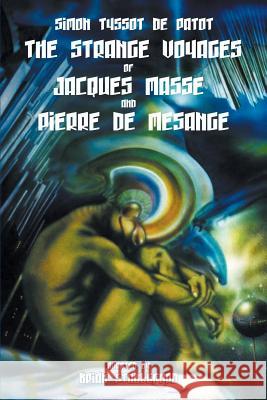
In Voyages and Adventures of Jacques Masse (c.1710), Simon Tyssot de Patot dispatched his protagonist to an imaginary land in an heretofore unknown austral continent, where he comes across a "lost world" utopian civilization inhabited by strange creatures that have survived from prehistoric times. The text also includes an early appearance by the Wandering Jew with a visionary narrative attributed to the folklore of the polar continent, in which a character discovers a subterranean portal to "the abode of the blessed." Finally, in Discoveries in the Region of the North Pole by the Reverend...
In Voyages and Adventures of Jacques Masse (c.1710), Simon Tyssot de Patot dispatched his protagonist to an imaginary land in an heretofore unknown au...
Pierre Veron (1833-1900) was a frequent contributor to two of the most popular Parisian humorous papers, Le Charivari (which served as the model for the English magazine Punch) and the Journal Amusant, until becoming editor-in-chief of both in 1874, retaining that position until a few months before his death. Although The Merchants of Health (1862) is set on the Planet Fantasia, it really is an ironic reflections on the French medical system of its era. Despite the fact that modern medicine is far more competent and better organized, it is disturbing to see how many of his observations...
Pierre Veron (1833-1900) was a frequent contributor to two of the most popular Parisian humorous papers, Le Charivari (which served as the model for t...