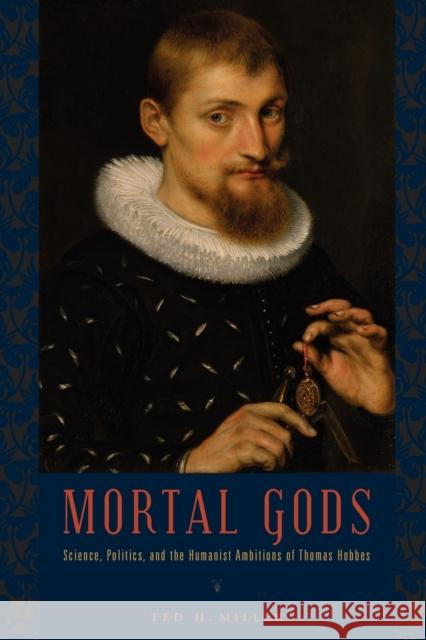
According to the commonly accepted view, Thomas Hobbes began his intellectual career as a humanist, but his discovery, in midlife, of the wonders of geometry initiated a critical transition from humanism to the scientific study of politics. In Mortal Gods, Ted Miller radically revises this view, arguing that Hobbes never ceased to be a humanist. While previous scholars have made the case for Hobbes as humanist by looking to his use of rhetoric, Miller rejects the humanism/mathematics dichotomy altogether and shows us the humanist face of Hobbes's affinity for mathematical learning...
According to the commonly accepted view, Thomas Hobbes began his intellectual career as a humanist, but his discovery, in midlife, of the wonders o...
According to the commonly accepted view, Thomas Hobbes began his intellectual career as a humanist, but his discovery, in midlife, of the wonders of geometry initiated a critical transition from humanism to the scientific study of politics. In Mortal Gods, Ted Miller radically revises this view, arguing that Hobbes never ceased to be a humanist. While previous scholars have made the case for Hobbes as humanist by looking to his use of rhetoric, Miller rejects the humanism/mathematics dichotomy altogether and shows us the humanist face of Hobbes's affinity for mathematical learning...
According to the commonly accepted view, Thomas Hobbes began his intellectual career as a humanist, but his discovery, in midlife, of the wonders o...