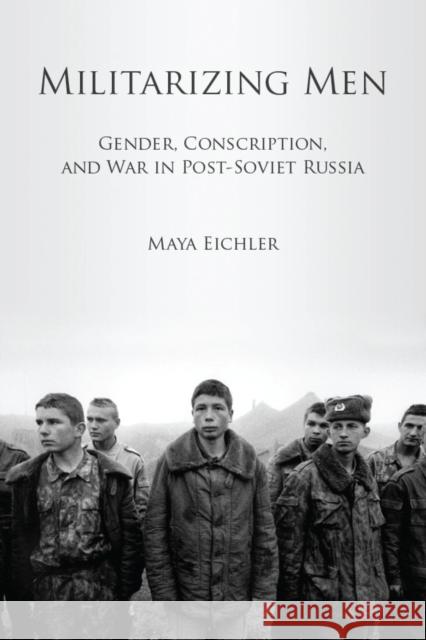
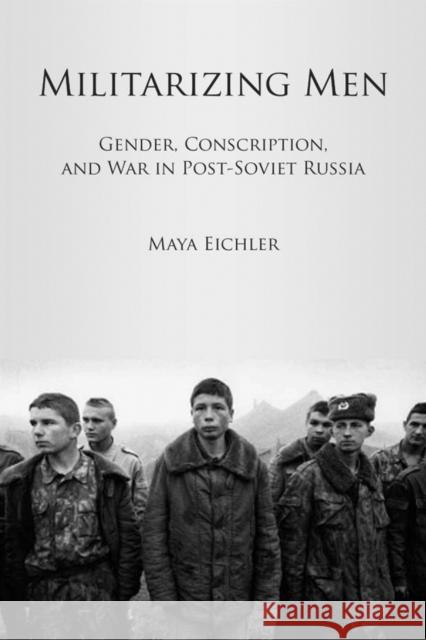
A state's ability to maintain mandatory conscription and wage war rests on the idea that a "real man" is one who has served in the military. Yet masculinity has no inherent ties to militarism. The link between men and the military, argues Maya Eichler, must be produced and reproduced in order to fill the ranks, engage in combat, and mobilize the population behind war. In the context of Russia's post-communist transition and the Chechen wars, men's militarization has been challenged and reinforced. Eichler uncovers the challenges by exploring widespread draft evasion and desertion,...
A state's ability to maintain mandatory conscription and wage war rests on the idea that a "real man" is one who has served in the military. Yet mascu...
A state's ability to maintain mandatory conscription and wage war rests on the idea that a -real man- is one who has served in the military. Yet masculinity has no inherent ties to militarism. The link between men and the military, argues Maya Eichler, must be produced and reproduced in order to fill the ranks, engage in combat, and mobilize the population behind war. In the context of Russia's post-communist transition and the Chechen wars, men's militarization has been challenged and reinforced. Eichler uncovers the challenges by exploring widespread draft evasion and desertion,...
A state's ability to maintain mandatory conscription and wage war rests on the idea that a -real man- is one who has served in the military. Yet mascu...
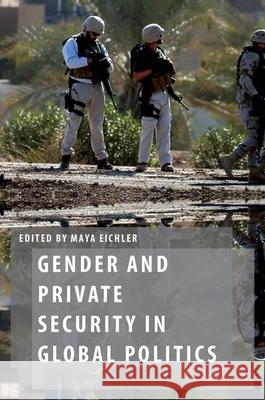
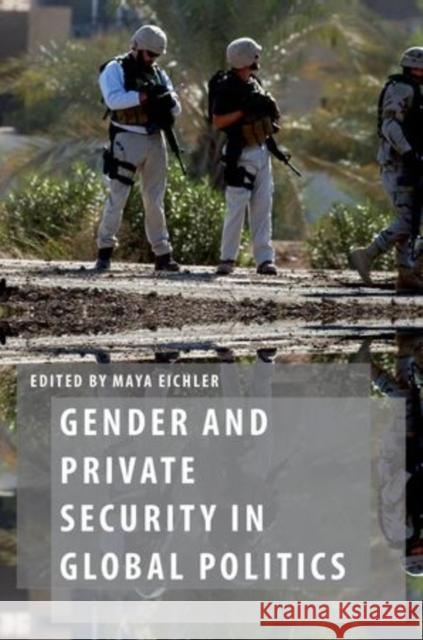
For two hundred years the provision of military security has been a central and defining function of the modern nation-state. The increasing reliance on private military and security companies in contemporary conflict marks a fundamental transformation in the organization of military violence, and it raises issues of accountability and ethics that are of particular concern to feminists. This privatization of force not only enables states to circumvent citizens' democratic control over questions of war and peace, but also undermines women's and minority groups' claims for greater inclusion in...
For two hundred years the provision of military security has been a central and defining function of the modern nation-state. The increasing reliance ...
For two hundred years the provision of military security has been a central and defining function of the modern nation-state. The increasing reliance on private military and security companies in contemporary conflict marks a fundamental transformation in the organization of military violence, and it raises issues of accountability and ethics that are of particular concern to feminists. This privatization of force not only enables states to circumvent citizens' democratic control over questions of war and peace, but also undermines women's and minority groups' claims for greater inclusion in...
For two hundred years the provision of military security has been a central and defining function of the modern nation-state. The increasing reliance ...