Till about the Year of Grace 860 there were no kings in Norway, nothing but numerous jarls, -essentially kinglets, each presiding over a kind of republican or parliamentary little territory; generally striving each to be on some terms of human neighborhood with those about him, but, -in spite of "Fylke Things" (Folk Things, little parish parliaments), and small combinations of these, which had gradually formed themselves, -often reduced to the unhappy state of quarrel with them. Harald Haarfagr was the first to put an end to this state of things, and become memorable and profitable to his...
Till about the Year of Grace 860 there were no kings in Norway, nothing but numerous jarls, -essentially kinglets, each presiding over a kind of repub...
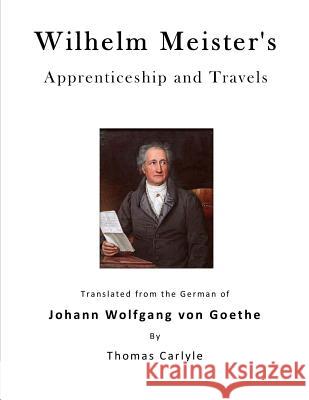
Translated from the German of Johann Wolfgang von Goethe
By Thomas Carlyle
Wilhelm Meister's Apprenticeship (German: Wilhelm Meisters Lehrjahre) is the second novel by Johann Wolfgang von Goethe, published in 1795-96.
Goethe's work on the novel began in the 1770s. An early version of the work, unpublished during Goethe's lifetime, was discovered in the early twentieth century, and published under the title Wilhelm Meister's Theatrical Calling (Wilhelm Meisters theatralische Sendung). When the Apprenticeship was completed in the...
Wilhelm Meister's
Apprenticeship and Travels
Translated from the German of Johann Wolfgang von Goethe
Thomas Carlyle was a 19th century Scottish philosopher and historian who was renowned as one of the great social commentators of his time. He wrote extensively about the past and the cultural connections of mythology as well.
Thomas Carlyle was a 19th century Scottish philosopher and historian who was renowned as one of the great social commentators of his time. He wrote ex...