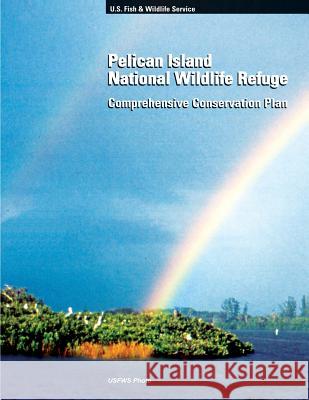
Pelican Island National Wildlife Refuge in Sebastian, Florida, is the birthplace of the National Wildlife Refuge System (Figure 1). What happened on this tiny island that made it so important, that it became a catalyst for what is now the world's largest network of lands and waters managed for fish and wildlife-the National Wildlife Refuge System? By the end of the 1800s, plume hunters, egg collectors, and vandals had nearly exterminated all the egrets, herons, and spoonbills from Pelican Island proper (i.e., the original 5.5-acre rookery island). Paul Kroegel (who was to later become the...
Pelican Island National Wildlife Refuge in Sebastian, Florida, is the birthplace of the National Wildlife Refuge System (Figure 1). What happened on t...
Located along Florida's southwest Gulf coast in Lee and Charlotte counties, the J.N. "Ding" Darling National Wildlife Refuge (NWR) Complex includes Pine Island, Matlacha Pass, Island Bay, Caloosahatchee, and J.N. "Ding" Darling NWRs (Figure 1). The Pine Island, Matlacha Pass, Island Bay, and Caloosahatchee refuges were each established with the primary purpose as a preserve and breeding ground for native birds.
Located along Florida's southwest Gulf coast in Lee and Charlotte counties, the J.N. "Ding" Darling National Wildlife Refuge (NWR) Complex includes Pi...
The Fish and Wildlife Service has prepared this Comprehensive Conservation Plan to guide the management of Pocosin Lakes National Wildlife Refuge (Pocosin Lakes NWR) in Hyde, Tyrrrell, and Washington Counties, North Carolina. The plan outlines programs and corresponding resource needs for the next 15 years, as mandated by the National Wildlife Refuge System Improvement Act of 1997.
The Fish and Wildlife Service has prepared this Comprehensive Conservation Plan to guide the management of Pocosin Lakes National Wildlife Refuge (Poc...
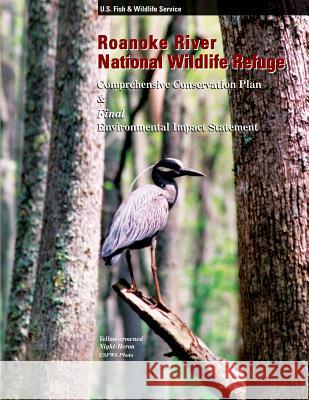
The U.S. Fish and Wildlife Service has prepared this Comprehensive Conservation Plan and Final Environmental Impact Statement to guide the management of Roanoke River National Wildlife Refuge in Bertie County, North Carolina. The plan outlines programs and corresponding resource needs for the next 15 years, as mandated by the National Wildlife Refuge Improvement Act of 1997.
The U.S. Fish and Wildlife Service has prepared this Comprehensive Conservation Plan and Final Environmental Impact Statement to guide the management ...
The U.S. Fish and Wildlife Service has developed this Comprehensive Conservation Plan (CCP) to provide a foundation for the management and use of the North Mississippi National Wildlife Refuges Complex (Complex), headquartered in Grenada, Mississippi. The North Mississippi National Wildlife Refuges Complex is comprised of Coldwater River, Dahomey, and Tallahatchie National Wildlife Refuges and the Farm Service Agency tracts of land in the area. The Complex provides habitat for large concentrations of wintering waterfowl and numerous species of neotropical migratory birds. This comprehensive...
The U.S. Fish and Wildlife Service has developed this Comprehensive Conservation Plan (CCP) to provide a foundation for the management and use of the ...
The U.S. Fish and Wildlife Service has prepared this Comprehensive Conservation Plan to guide the management of Central Arkansas National Wildlife Refuge Complex. This Complex is comprised of Bald Knob, Big Lake, Cache River, and Woodruff Counties of east and central Arkansas.
The U.S. Fish and Wildlife Service has prepared this Comprehensive Conservation Plan to guide the management of Central Arkansas National Wildlife Ref...
By the mid- twentieth century, the Kirtland's Warbler was a bird in trouble. Wildfire, a natural ecological process vital to producing its habitat, had been reduced in frequency and extent, severely reducing the population
By the mid- twentieth century, the Kirtland's Warbler was a bird in trouble. Wildfire, a natural ecological process vital to producing its habitat, ha...
The purposes for establishing the Rappahannock River Valley National Wildlife Refuge are to conserve and protect fish and wildlife resources, included endangered and threatened species and wetlands. Refuge habitats include freshwater total marsh, forested swamp, upland deciduous forest, mixed pine forest, and managed grassland.
The purposes for establishing the Rappahannock River Valley National Wildlife Refuge are to conserve and protect fish and wildlife resources, included...