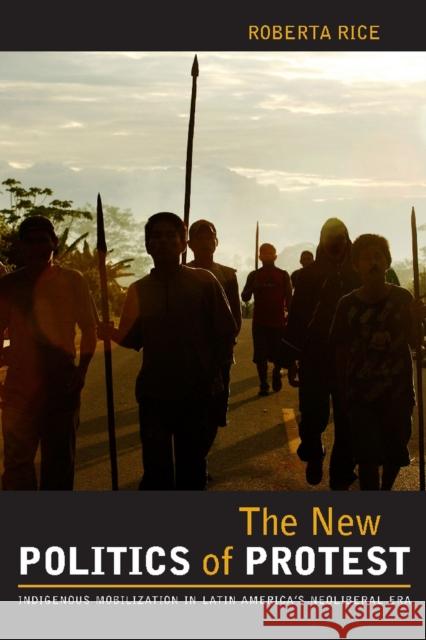
In June 1990, Ecuador saw the first major indigenous rebellion within its borders since the colonial era. For weeks, indigenous protesters participated in marches, staged demonstrations, seized government offices, and blockaded roads. Since this insurrection, indigenous movements have become increasingly important in the fight against Latin American Neoliberalism.
Roberta Rice's New Politics of Protest seeks to analyze when, where, and why indigenous protests against free-market reforms have occurred in Latin America. Comparing cases in Ecuador, Peru, Bolivia, and Chile, this...
In June 1990, Ecuador saw the first major indigenous rebellion within its borders since the colonial era. For weeks, indigenous protesters partici...
Latin American and Caribbean communities and civil societies are undergoing a rapid process of transformation. Instead of pervasive social atomization, political apathy, and hollowed-out democracies, which have become the norm in some parts of the world, this region is witnessing an emerging collaboration between community, civil society, and government that is revitalizing democracy.
This book argues that a key explanation lies in the powerful and positive relationship between community and civil society that exists in the region. The ideas of community and civil society tend to be...
Latin American and Caribbean communities and civil societies are undergoing a rapid process of transformation. Instead of pervasive social atomizat...