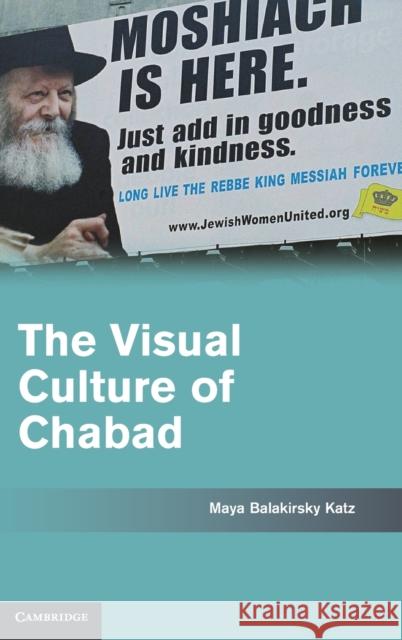
This book presents the first full-length study of a vast and complex visual tradition produced, revered, preserved, banned, and destroyed by the Hasidic movement of Chabad. This rich repository of visual artifacts provides the archaeological data for an analysis of how the movement consolidated its influence during a period of political and economic transformation and survived its immigration to America in the wake of the Holocaust. As one of the most self-documented and media-preserved modern Jewish movements, Chabad s rich material culture, including the hand-held portrait, the rebbishe...
This book presents the first full-length study of a vast and complex visual tradition produced, revered, preserved, banned, and destroyed by the Hasid...
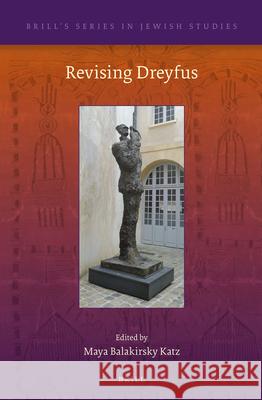
In Revising Dreyfus, contributors from a wide variety of disciplines (art history, film, media, theater, sociology, history) offer new ways of understanding the ever-evolving meanings of the Dreyfus Affair. Although the Dreyfusards led the way in explicating the nuances of the Affair in lengthy treatises, the anti-Dreyfusards far outstripped their opponents on the graphic front, particularly through print media, photographs, postcards, broadsides, films, illustrated journal covers, and the plastic arts. Revising Dreyfus traces the dominant modes of "seeing" the Dreyfus Affair,...
In Revising Dreyfus, contributors from a wide variety of disciplines (art history, film, media, theater, sociology, history) offer new ways of ...
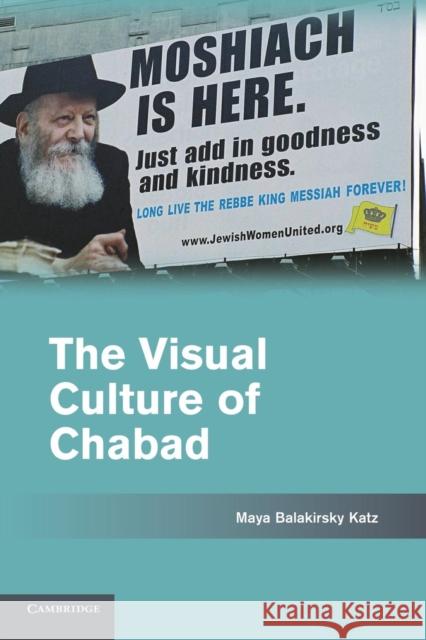
This book presents the first full-length study of a vast and complex visual tradition produced, revered, preserved, banned, and destroyed by the Hasidic movement of Chabad. This rich repository of visual artifacts provides the archaeological data for an analysis of how the movement consolidated its influence during a period of political and economic transformation and survived its immigration to America in the wake of the Holocaust. As one of the most self-documented and media-preserved modern Jewish movements, Chabad s rich material culture, including the hand-held portrait, the rebbishe...
This book presents the first full-length study of a vast and complex visual tradition produced, revered, preserved, banned, and destroyed by the Hasid...
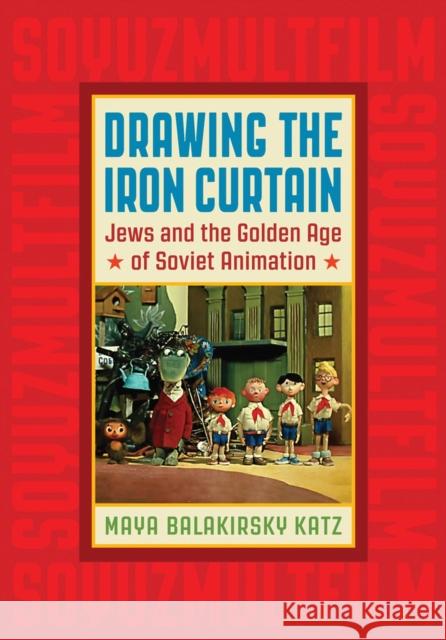
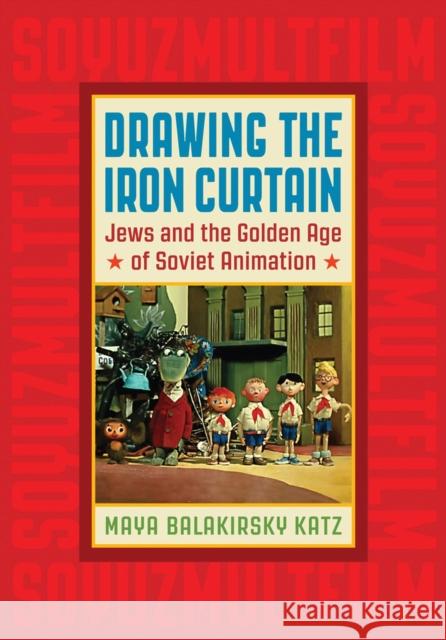
In the American imagination, the Soviet Union was a drab cultural wasteland, a place where playful creative work and individualism was heavily regulated and censored. Yet despite state control, some cultural industries flourished in the Soviet era, including animation. Drawing the Iron Curtain tells the story of the golden age of Soviet animation and the Jewish artists who enabled it to thrive. Art historian Maya Balakirsky Katz reveals how the state-run animation studio Soyuzmultfilm brought together Jewish creative personnel from every corner of the Soviet Union and served as an...
In the American imagination, the Soviet Union was a drab cultural wasteland, a place where playful creative work and individualism was heavily regulat...
In the American imagination, the Soviet Union was a drab cultural wasteland, a place where playful creative work and individualism was heavily regulated and censored. Yet despite state control, some cultural industries flourished in the Soviet era, including animation. Drawing the Iron Curtain tells the story of the golden age of Soviet animation and the Jewish artists who enabled it to thrive. Art historian Maya Balakirsky Katz reveals how the state-run animation studio Soyuzmultfilm brought together Jewish creative personnel from every corner of the Soviet Union and served as an...
In the American imagination, the Soviet Union was a drab cultural wasteland, a place where playful creative work and individualism was heavily regulat...