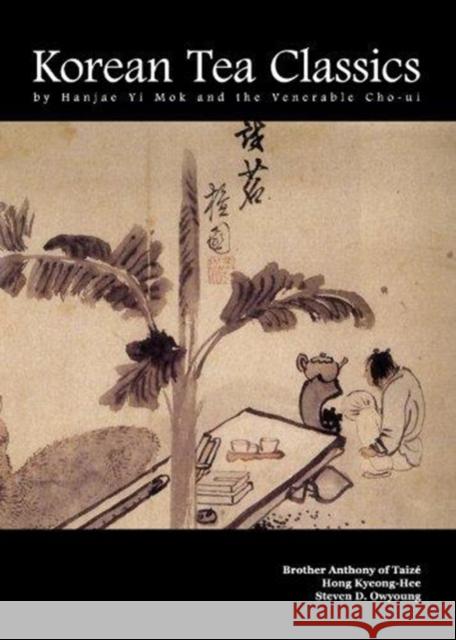
Most of the books about tea published across the world in recent years make no mention of the tea produced in Korea. Likewise, people who study the literary texts inspired by tea in earlier centuries usually only know of the works written in China and Japan. Yet Korea not only has its own history of tea and the Way of Tea, it also has its own Classics of Tea, its Poetry of Tea.
Three ancient texts expressing the essence of the Korean Way of Tea are here translated into English for the first time. The oldest, "ChaBu Rhapsody to Tea," by Hanjae Yi Mok (1471-1498), is a sophisticated...
Most of the books about tea published across the world in recent years make no mention of the tea produced in Korea. Likewise, people who study the...
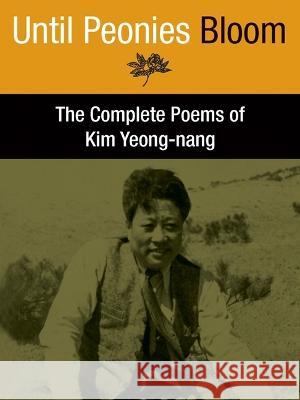
Kim Yeong-nang (1903-1950) is highly reputed in Korea for the delicate lyricism of his poems. Yet in many ways he has remained little known, even in Korea, limited to a small number of often anthologized poems. Although he was a resolute opponent of Japanese colonial rule, he did not suffer frequent imprisonment, or death, so his role as a champion of Korean independence has largely been ignored. Killed in bombing near the start of the Korean War, he had no time to participate in the development of a new Korean poetry.
Many of Kim Yeong-nang's earlier poems clearly express opposition...
Kim Yeong-nang (1903-1950) is highly reputed in Korea for the delicate lyricism of his poems. Yet in many ways he has remained little known, even i...